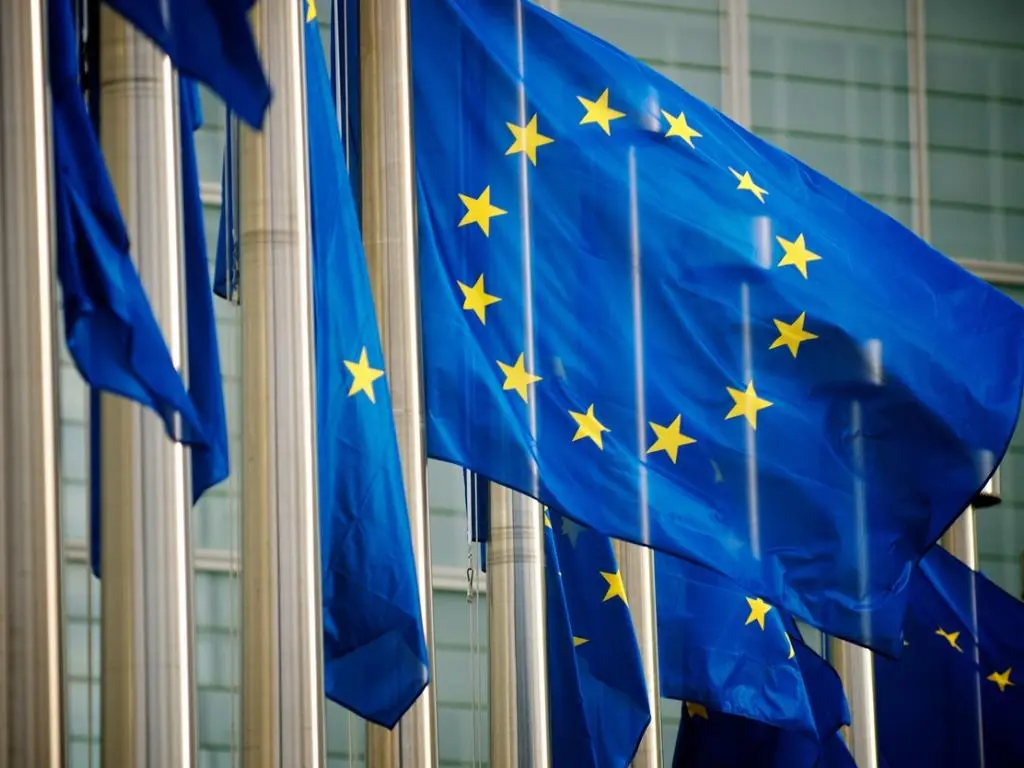
Lawmakers in the European Parliament and Council announced that they have reached a provisional agreement to introduce a new binding target in the European Climate Law to reduce greenhouse gas emissions by 90% by 2040, on a 1990 basis.
The new agreement required a series of compromises in order to be completed, including the creation of a significant role for international carbon credits in achieving the goal, biennial reviews of the new target, and a delay of the extension of the EU’s ETS carbon pricing system to the road transport and building sectors. In a post announcing the deal, the EU Commission described the agreement as “a pragmatic and flexible pathway to 2040 that reflects today’s economic and geopolitical realities.”
Wopke Hoekstra, EU Commissioner for Climate, Net Zero and Clean Growth, said:
“This agreement is pragmatic and ambitious, delivering speed, predictability, and flexibility. Above all, it shows that climate, competitiveness and independence go hand in hand and sends a powerful message to our global partners.”
The European Commission initially presented the new 2040 target in July, with a proposal to amend the EU Climate Law, initially adopted in 2021, which set into legislation the EU goal to reach climate neutrality by 2050, as well as the EU’s current interim target to reduce net GHG emissions by at least 55% by 2030 compared to 1990. In a recent update, the Commission reported that the EU is nearly on track to hit its 2030 climate goal, and noted that it has already achieved a GHG emissions reduction of 37% as of the end of 2023 on a 1990 basis.
The Commission’s proposal introduced a series of changes from its prior climate targets, including the ability to use various forms of carbon credits to reach the 2040 goal, allowing international carbon credits under Article 6 of the Paris Agreement to be used from 2036 to contribute up to 3% of the 90% reduction target.
Citing concerns about the EU’s global competitiveness and the economic impact of the proposed update to the climate law, several states including Poland, the Czech Republic and Hungary and right-wing MEPs pushed back on the 2040 target, calling it unrealistic or risky, ultimately requiring additional flexibilities to be added in order to come to an agreement.
Among the key changes from the Commission’s proposal in the new deal is an expanded role for carbon markets, with the agreement allowing for international carbon credits to contribute up to 5% of the new goal from 2036, requiring actual domestic reductions of 85% by 2040. The agreement may also establish a 2030 – 2035 pilot phase to support the development of a high-integrity international credit market. The new agreement also allows for the use of domestic permanent carbon removals under the EU ETS (Emissions Trading System), to compensate for hard-to-abate emissions.
The deal also opens the door for potential changes to the new 2040 target by introducing a review by the Commission that will assess progress every second year, that will consider factors including the most recent scientific data, technological developments, energy prices, the level of net removals and the EU’s international competitiveness, with the Commission required to propose revisions to the Climate Law if appropriate.
The agreement also delays the implementation of the EU’s revised Emissions Trading System, ETS2, by a year to 2028. ETS2, initially planned to be launched in 2027, will extend the EU’s carbon pricing system to new sectors, including fuel used for road transport and for heating buildings. Additionally, the new agreement also greater flexibilities within and across sectors, providing member states with the ability to compensate for shortfalls within individual sectors to meet climate goals.
European Commission President Ursula von der Leyen said:
“Today, the EU is showing our strong commitment to climate action and the Paris Agreement. One month after COP30, we have turned our words into action – with a legally binding target of 90% emissions reduction by 2040. We have a clear direction of travel towards climate neutrality. And a pragmatic and flexible plan to make the clean transition more competitive.”
The agreement will need to be formally adopted by the Parliament and EU Council before entering into force.