
• New York will require mandatory greenhouse gas reporting from facilities emitting 10,000 metric tons of CO2e or more, beginning in 2027, covering power, fuel supply, waste, and industrial sectors.
• The state is moving ahead as federal climate disclosure and emissions transparency programs face rollback, positioning New York as a subnational regulator of record on emissions data.
• Verified emissions data will underpin climate policy, investment targeting, and compliance with New York’s Climate Leadership and Community Protection Act.
State regulators have finalized a sweeping greenhouse gas disclosure regime that will require thousands of carbon-intensive entities to report emissions annually from 2027, cementing New York’s role as a climate disclosure leader as federal transparency efforts stall.
The New York State Department of Environmental Conservation has adopted final rules establishing a Mandatory Greenhouse Gas Reporting Program that will apply to major emitters across the energy, fuel supply, waste, and industrial economy. Facilities emitting at least 10,000 metric tons of carbon dioxide equivalent per year will be required to submit detailed emissions data to the state beginning in June 2027, covering emissions from the prior calendar year.
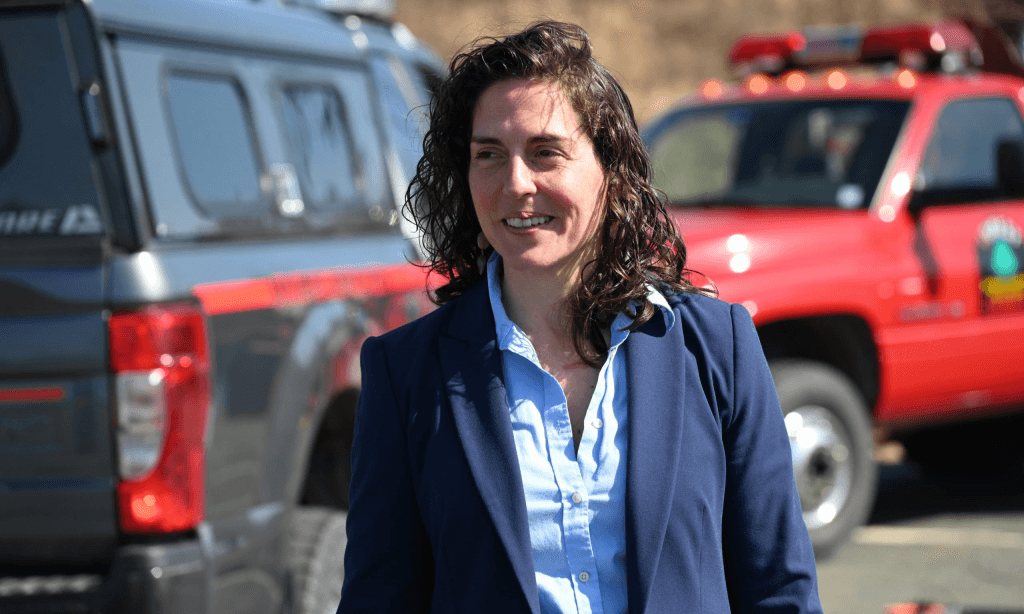
DEC Commissioner Amanda Lefton framed the rule as a direct response to weakening federal oversight. “The Reporting Rule will enable DEC to collect the information necessary, despite proposed rollbacks on the federal level, and develop effective strategies that reduce harmful air pollution and direct investments where they are most needed.”
A State-Level Answer to Federal Retreat
The finalization of the rule comes as the US federal government, under the Trump administration, has moved to scale back emissions transparency initiatives, including steps by the Environmental Protection Agency to end the Greenhouse Gas Reporting Program and actions by the Securities and Exchange Commission to halt implementation of its climate disclosure rules. In response, states including New York and California have advanced their own reporting frameworks over recent months.
In New York, the reporting mandate follows a directive issued earlier this year by Governor Kathy Hochul to advance a state-level greenhouse gas reporting system. The goal is to identify major polluters, inform emissions-reduction policies, assess compliance with climate programs, and support delivery of the state’s statutory emissions targets under the Climate Leadership and Community Protection Act.
Scope, Thresholds, and Verification
The regulation casts a wide net across the economy. Reporting entities include electricity generation facilities, stationary combustion sources, landfills, waste-to-energy plants, natural gas compressor stations, and other infrastructure exceeding the emissions threshold. Fuel suppliers of natural gas, petroleum products, liquefied and compressed natural gas, coal, and liquid fuels are also covered, as are electric power entities.
The rule extends to waste haulers transporting solid waste out of state when emissions exceed the threshold, agricultural lime and fertilizer suppliers, and facilities engaged in anaerobic digestion and liquid waste storage when emissions reach reportable levels.
RELATED ARTICLE: New York Releases Draft Rule Requiring Major Emitters to Report GHG Emissions By 2027
Some of the largest emission sources will be required to obtain annual third-party verification of their emissions data through DEC-accredited verification services, introducing an assurance layer similar to emerging international disclosure norms.
After releasing draft regulations in March 2025, DEC received more than 3,000 public comments. Changes in the final rule include extended verification deadlines for the first two years of reporting and reduced obligations for facilities that have closed or ceased operations.
“DEC’s greenhouse gas emissions reporting program and subsequent data collection is critical to the State’s ongoing efforts to protect our environment and improve the health and quality of life of all New Yorkers,” Lefton said.
Data Infrastructure and Reporting Tools
Reporting entities will submit emissions data through the New York State Electronic Greenhouse Gas Emissions Reporting Tool, or NYS e-GGRT, an electronic platform currently under development. DEC has indicated that the system will be designed to simplify compliance and will be accompanied by training once operational.
To support preparatory work, DEC has also released a greenhouse gas estimation tool to help entities approximate emissions from fuel combustion, industrial processes, waste management, and upstream activities. The agency has emphasized that the tool is illustrative only and does not constitute a legally binding determination of reporting obligations.
Why It Matters for Executives and Investors
For corporate leaders and investors, the rule introduces a durable, state-enforced emissions dataset at a time when federal disclosure pathways remain uncertain. Verified, standardized emissions reporting will inform capital allocation, climate risk assessment, and regulatory compliance strategies in one of the world’s largest subnational economies.
More broadly, New York’s move reinforces a growing reality in global climate governance. When federal alignment weakens, states and regions are increasingly setting the pace, creating parallel disclosure regimes that multinational companies must integrate into their reporting, assurance, and transition planning frameworks.
Follow ESG News on LinkedIn
The post New York Mandates Statewide GHG Disclosure for Large Emitters Starting 2027 appeared first on ESG News.