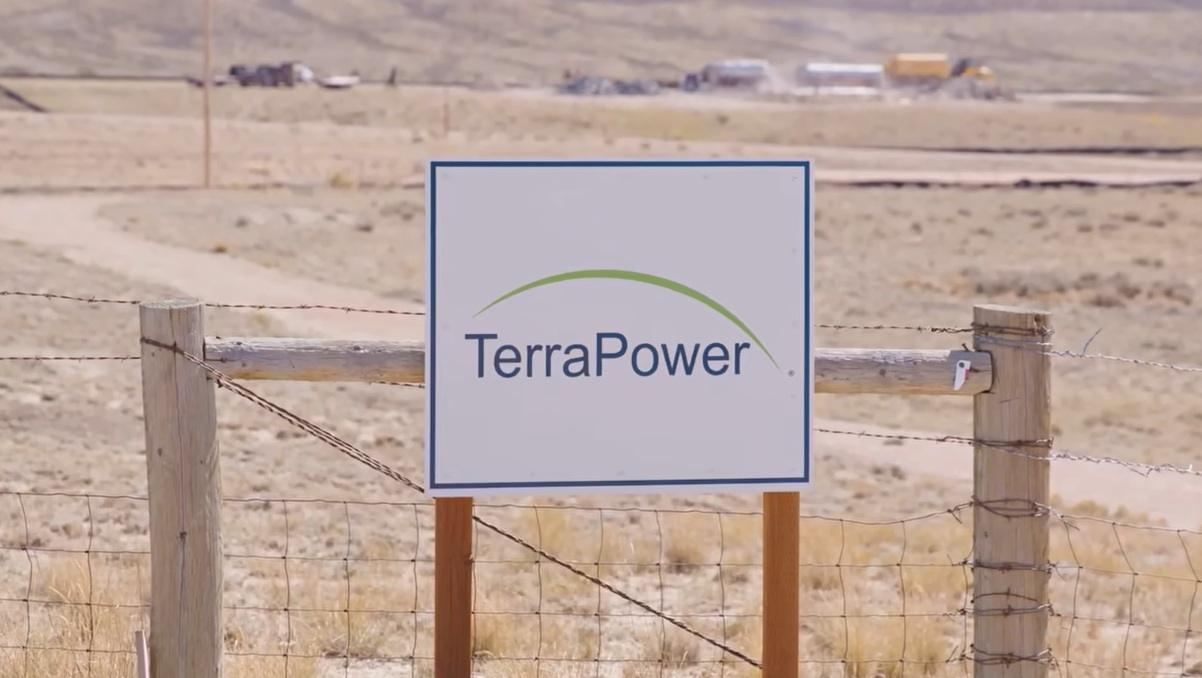
Nuclear technology company TerraPower and Facebook, Instagram, and WhatsApp owner Meta announced a new agreement to build up to 8 advanced nuclear reactors utilizing TerraPower’s “Natrium” technology, supporting Meta’s growing energy needs and sustainability goals with a new source of as much as 2.4 GW of carbon-free energy.
Launched in 2008 by Bill Gates, Nathan Myhrvold and Gilleland, TerraPower is a nuclear innovation company aimed at creating technologies to provide safe, affordable and abundant carbon-free energy. Bill Gates currently serves as Chair of TerraPower’s board.
The company’s Natrium system is designed to integrate into a grid with high levels of variable-output renewables, by combining a 345 MW sodium fast reactor with a molten salt energy storage system that can retain large amounts of energy that can be used to power the grid at peak demand when weather or darkness reduce renewable output.
While providing a baseload of 345 MW, each plants’ built-in storage system can boost energy delivery to up to 500 MW for over five hours.
TerraPower recently began construction on the first commercial-scale, advanced nuclear project in the U.S., which is expected to be complete in 2030.
Under the new agreement, Meta will provide funding to support the deployment of the Natrium plants, beginning with support for the early development of two new Natrium units, and Meta will also receive rights for energy for up to six additional units. Delivery of the additional units is anticipated for as early as 2032.
Chris Levesque, TerraPower President and CEO, said:
“To successfully address growing energy demand, we must deploy gigawatts of advanced nuclear energy in the 2030s. This agreement with Meta is designed to support the rapid deployment of our Natrium technology that provides the reliable, flexible, and carbon-free power our country needs.”
The announcement is the latest in a series of moves by Meta to turn to nuclear power to address the need for a rapid increase in electricity production to accommodate the growth in AI-driven data center capacity and power consumption, while protecting its goals to reduce the emissions impact of its operations.
Meta has set targets to reach net-zero emissions across its value chain by 2030, and to continue to match 100% of the electricity used in its data centers and offices with renewable energy. In the company’s 2024 Sustainability Report, Meta said that while it has maintained net zero in its operations since 2020, its 2030 net zero value chain goal will be significantly harder to achieve, adding that “the challenge of reaching our sustainability goals given the increased demand for energy and resources driven by AI is not unique to Meta.”
In late 2024, the company announced the launch of a request for proposals (RFPs) for nuclear energy developers in the U.S. to provide new nuclear capacity, targeting the addition of between 1-to-4 gigawatts (GW) of new nuclear generation, with delivery to begin in the early 2030s. Early last year, Meta, alongside companies including its tech giant peers Amazon and Google signed a pledge to support the goal to triple global nuclear energy capacity by 2050.
The new agreement with TerraPower marks Meta’s largest support of advanced nuclear technologies to date.
Urvi Parekh, Director of Global Energy at Meta, said:
“Meta is committed to supporting innovative energy solutions that can deliver reliable, scalable, and clean power for our operations and the communities we serve. This agreement with TerraPower – the result of Meta’s nuclear RFP process, which identified leading developers of nuclear energy to help us advance our energy goals – marks a significant step forward in advancing next-generation nuclear technology.”