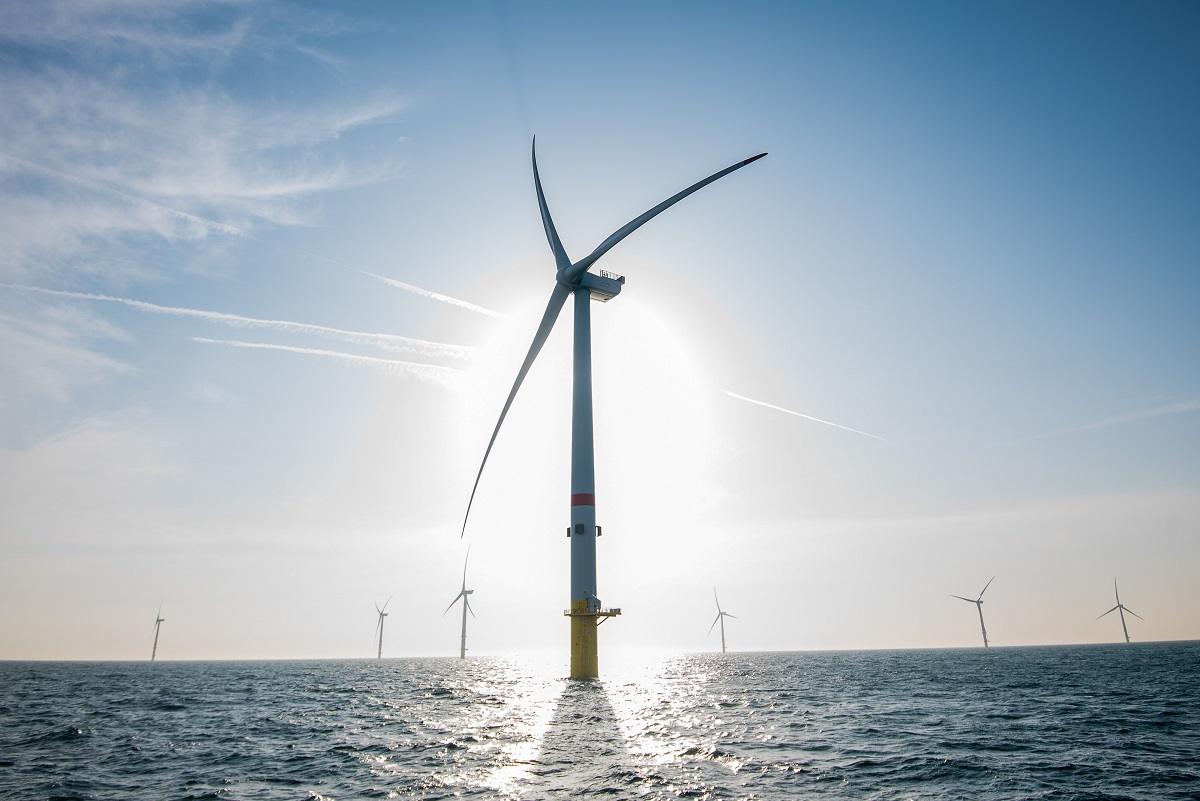
Energy ministers from the UK and eight other European countries announced the launch of the Hamburg Declaration of Energy Ministers, setting a new ambition to jointly develop up to 100 GW of offshore wind projects in the North Sea, in a bid to “turn the North Seas into the largest clean power hub in the world.”
The declaration was adopted at the North Sea Summit 2026 in Hamburg by ministers from Belgium, Denmark, France, Germany, Ireland, Luxembourg, the Netherlands, Norway and the United Kingdom.
According to the declaration, while offshore renewable energy offers a crucial resource to help address issues including intense global competition, accelerating climate change, high electricity costs and a changing geopolitical landscape, the offshore wind industry faces challenges from rising financing and component costs, and uncertainty about future electricity demand and electricity prices, with a new regional approach enabling the sector to “benefit from a more reliable and efficient sea-basin wide offshore renewable deployment.”
Following up on the “Ostend Declaration” in 2023 by the nine countries to reach 300 GW of offshore wind generation capacity in the North Seas by 2050, the new document envisions up to a third of that goal being reached through “cooperation projects,” which would comprise of hybrid offshore wind projects, including the development of transmission infrastructure with grid connections to multiple countries, and wind farms able to connect to the grids of other countries than the ones in which they are located.
According to the declaration, these cooperation projects are intended to reduce overall system costs, improve security of supply and help lower electricity prices for consumers, while making more efficient use of limited marine space. Some projects could also be linked to offshore hydrogen production, where cost-effective, to support industrial decarbonization and reduce reliance on fossil fuel imports.
The Hamburg Declaration places a strong emphasis on financing and investment certainty, noting that achieving the 300 GW ambition will require intensive collaboration and large volumes of private capital. Ministers committed to working toward a voluntary Offshore Financing Framework, designed to support the planning and financing of cross-border offshore wind and grid projects, including through fair cost-benefit sharing arrangements between hosting and non-hosting countries.
They also highlighted the need for coordinated offshore wind tender pipelines, market arrangements for hybrid projects, and instruments such as two-sided contracts for difference and power purchase agreements to improve revenue certainty and de-risk investments.
Alongside the declaration, governments, industry and transmission system operators signed a Joint Offshore Wind Investment Pact for the North Seas, which sets out expectations for industry to help mobilize large-scale capital, and for the groups to work together to add 15 GW of offshore wind capacity in the North Sea annually between 2031 and 2040.
Industry participants welcomed the new commitments, with Denmark-based energy developer Ørsted’s CEO Rasmus Errboe commenting that the new pact “is exactly what we need for Europe – and exactly what we need at Ørsted, given our significant focus on offshore wind in Europe.”
Ministers also committed to accelerating permitting procedures, strengthening offshore grid and hydrogen network planning, supporting supply-chain expansion under the EU’s Net Zero Industry Act, and enhancing the physical and cyber security of offshore energy infrastructure.
EU Commissioner for Energy and Housing, Dan Jørgensen said:
“In these turbulent geopolitical times, Europe must stand strong and united — and choose independence. That means doubling down on clean, safe, home-grown energy. It means building on our natural strengths, and few are greater than the North Sea and its vast offshore wind potential.”