
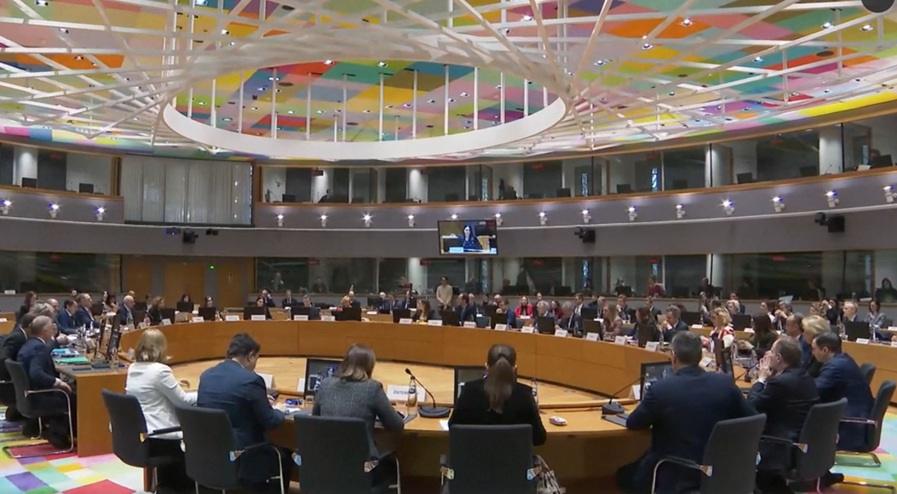
EU member states in the European Council voted on Tuesday to approve an agreement to significantly scale back sustainability reporting and due diligence requirements for companies under the “Omnibus I” simplification package.
The green light by EU states marks the last major step towards the final adoption of the new rules to dramatically cut back the number of companies covered by key pieces of sustainability legislation, including the Corporate Sustainability Reporting Directive (CSRD) and Corporate Sustainability Due Diligence Directive (CSDDD), following the approval of the agreement in December by lawmakers in the European Parliament.
The final Omnibus agreement went much farther in cutting sustainability reporting and due diligence obligations for companies than the package initially proposed by the European Commission in early 2025 as part of its simplification agenda to boost European competitiveness and reduce compliance burdens on companies.
The Commission’s initial proposal would have reduced the number of companies covered by the CSRD by approximately 80% by moving the regulation to cover only companies with more than 1,000 employees from the current 250 employee threshold, while retaining the CSDDD’s 1,000 employee threshold, in addition to shifting due diligence requirements to focus primarily at the level of direct business partners, unless the company has plausible information of adverse impacts further down the value chain. The initiative also introduced limits to the amount of information that could be requested from smaller value chain companies.
With the CSRD and CSDDD legislation re-opened, however, both the EU Parliament and member states in the European Council proposed much sharper cuts in their negotiating positions, leading to an agreement proposing substantially reduced sustainability regulations.
While retaining the initial proposal’s 1,000 employee cutoff for the CSRD, the newly approved agreement added a new threshold excluding companies with less than €450 million in annual revenues from being included in the regulation, removing an estimated 90% of companies from the sustainability reporting requirements.
The cuts to the CSDDD were even more drastic, with the co-legislators agreeing to raise the threshold for the sustainability due diligence regulation to 5,000 employees and €1.5 billion in revenue, removing the vast majority of companies.
In addition to reducing the number of companies covered by the CSRD and CSDDD, the agreement made additional changes to the current regulations, and to the Commission’s proposals, including removing the CSDDD’s obligation for companies to prepare climate transition plans. The agreement also eliminated the regulation’s EU-wide liability regime, and also lowered potential penalties under the regulation to a maximum cap of 3% of global revenues. The agreement also delayed the CSDDD by a year, with companies covered by the regulation now required to comply by July 2029.
As proposed by the Commission, the agreement also limits the amount of information that companies under the scope of the regulations can request from smaller companies within their supply chains, allowing companies with under 1,000 employees to refuse to provide reporting information beyond that outlined in the voluntary sustainability reporting standard for SMEs (VSME), and directing companies under CSDDD to rely on primarily reasonably available information instead of systematically requesting information from smaller value chain companies.
In its statement announcing the approval of the Omnibus agreement, the EU Council highlighted the competitiveness benefits of the deal, noting that the package “reduces complexity and unnecessary barriers, cuts red tape, enhances efficiency and introduces more flexibility for companies that remain subject to its scope, with the aim to boost EU competitiveness, especially in a constantly changing geopolitical framework.”
Marilena Raouna, Deputy minister for European affairs for Cyprus, which currently holds the rotating Presidency of the Council, said:
“With today’s decision, we are delivering on our commitment for a European Union which is more competitive. Through the package adopted, we are reducing unnecessary and disproportionate burdens on our businesses, with simpler, more targeted and more proportionate rules, both for our companies and our citizens.”
With the approval by both legislative bodies now in place, the updated act will be published in the EU’s official journal in the coming days and will come into force 20 days after publication.