
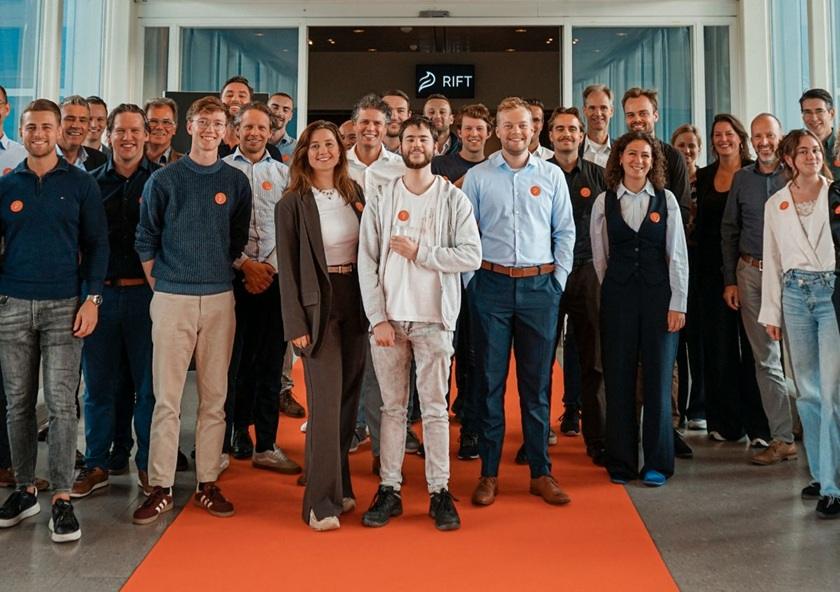
Netherlands-based cleantech startup RIFT announced that it has raised €113.8 million (USD$132 million) in combined funding through a Series B round and a European Union grant, aimed at scaling its technology to decarbonize industrial heat.
Industrial heating uses high amounts of energy, often from fossil fuel-based sources, to transform materials into products such as metals and plastics. While solutions to replace fossil-based energy sources have emerged, including renewable energy, electrification and hydrogen, many are not available at scale for industrial use due to current grid limitations.
Founded in 2020, RIFT provides Iron Fuel Technology, which operates like a rechargeable battery for heat generation as a solution to help decarbonize industrial heat. The solution’s self-enclosed system burns iron powder in a boiler, creating heat at varying temperatures to produce hot water, steam or hot air in a process that avoids direct CO₂ emissions and maintains ultra-low NOx emissions.
The company said that the funding will support the execution of its first commercial project, which is expected to become operational by 2029. The project is anticipated to deliver approximately 340 GWh of industrial heat annually, totaling around 5 TWh of decarbonized heat and reducing CO₂ emissions by more than one million tons over a 15-year lifespan.
Mark Verhagen, CEO of RIFT, said:
“Over the past years, we have demonstrated that Iron Fuel Technology performs reliably in an industrial environment. With this financing, we are moving into the next phase: preparing and executing our first commercial project.”
The funding includes $96.4 million in Series B financing, led by PGGM, with participation from Invest-NL and Oost NL, as well as Rubio Impact Ventures, BOM and the Energietransitiefonds Rotterdam, alongside $35.6 million from the EU Innovation Fund for a related project. The new funding follows RIFT’s $11.9 million Series A round, which was completed in October 2024.
Tim van den Brule, Investment Director at PGGM Infrastructure, said:
“As a consortium, we have closely followed RIFT’s development and see strong potential for tangible industrial impact. Many industrial innovations stall in the transition from demonstration to realization. We have deliberately chosen a financing structure that provides capital through to execution.”