
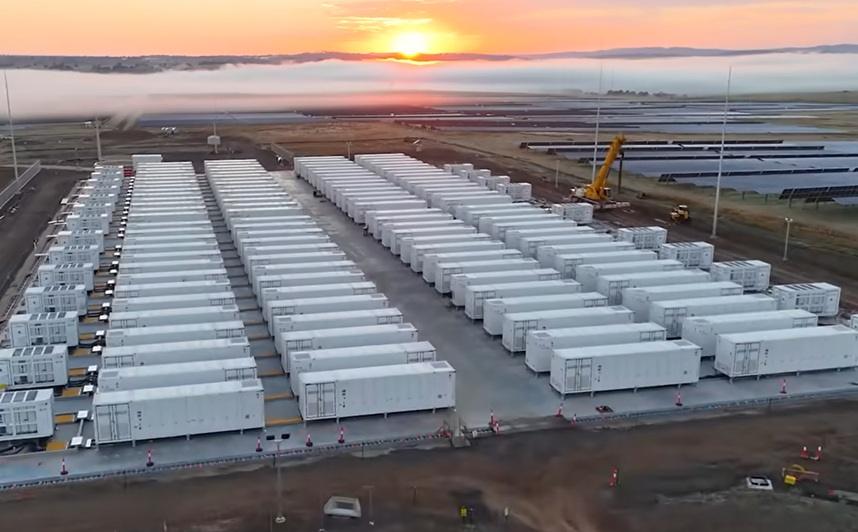
Grid-scale energy storage solutions provider Energy Vault announced an agreement to acquire an 850 MW portfolio of battery energy storage systems (BESS) projects in Japan from a domestic energy storage developer.
According to Energy Vault, the transaction marks the company’s formal entry into the Japanese market, with the company citing key unique market features that it will be able to capitalize on, including increasing grid constraints, rapid renewable penetration, and a projected 50%+ CAGR in BESS capacity. Energy Vault added that it expects to also target the high-growth AI compute market for further growth opportunities.
Robert Piconi, Chairman and Chief Executive Officer of Energy Vault, said:
“Entering the Japanese market is a key component of our high growth markets expansion strategy and represents one of the most compelling energy storage growth opportunities globally. This acquisition provides us with a foundational leadership position in Japan with advanced stage, attractive storage IPP projects coupled with critical local execution capabilities necessary to deliver at the highest performance levels within the Japanese BESS market.”
The acquired portfolio includes 350 MW of advanced-stage BESS projects targeted to commence construction in H2 2027 and to reach commercial operations beginning in H2 2028, as well as 500 MW of early-stage BESS projects. Additionally, the transaction includes the integration of an established team of local energy experts, which Energy Vault said will provide on-the-ground expertise in Japanese land rights, complex permitting, and utility interconnections.
Energy Vault said that the acquisition will bring its global portfolio of owned assets to over 1 GW of energy and AI digital compute infrastructure in operation or under construction, expected to yield more than $180 million in annual, recurring EBITDA streams once fully constructed and operational in the next 12-36 months.
Piconi added:
“Despite being a highly developed economy, Japan’s energy storage market remains significantly underpenetrated and is now entering a period of accelerated growth driven by renewable expansion and structural grid constraints. Importantly, storage demand in Japan is not tied to load growth, but to the increasing need for flexibility, resilience, and system stability—creating a powerful, long-duration growth tailwind for our broad portfolio of solutions.”