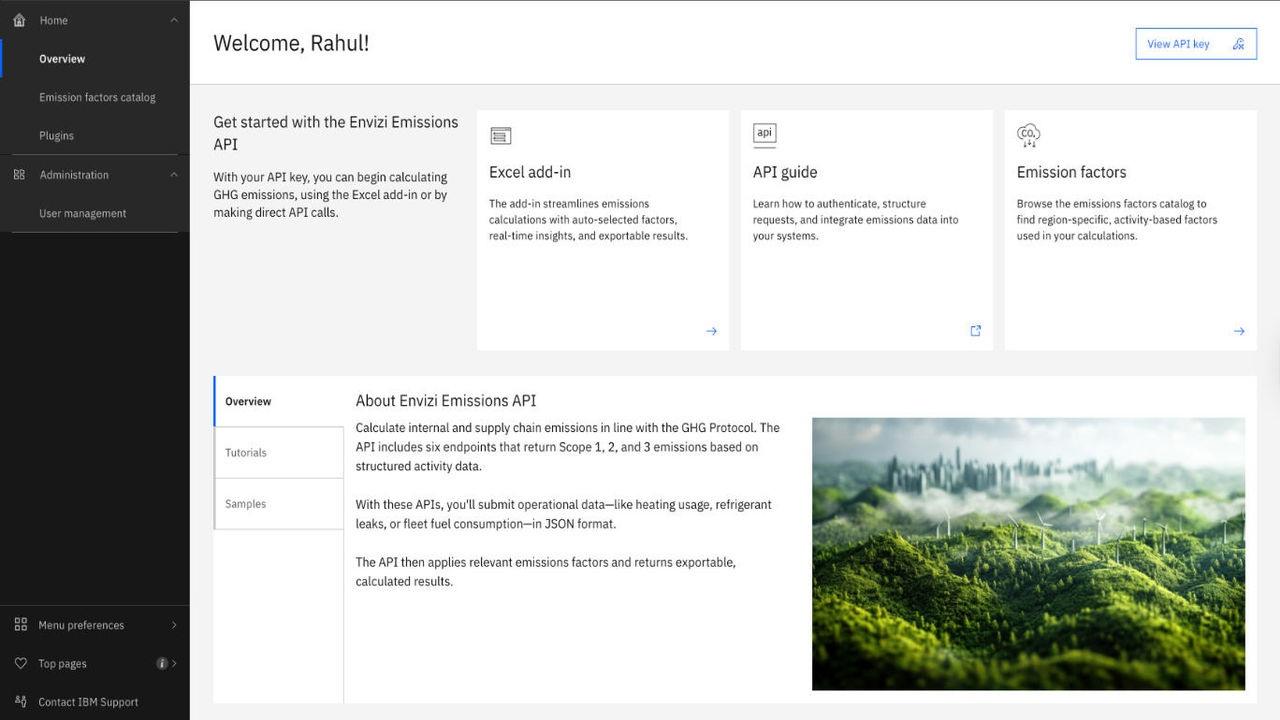
IBM announced the general availability of the IBM Envizi Emissions API, its new tool aimed at enabling companies to integrate GHG Protocol-aligned greenhouse gas emissions calculations into their existing software, systems and workflows.
According to IBM, the launch comes as demand grows for real-time, scalable emissions insights, with the new solution addressing the need for sustainability data tools that can integrate into their products and systems.
In a post announcing the general availability of the solution, Kendra DeKeyrel VP, Asset Lifecycle Management Product and Engineering at IBM, said:
“Emissions calculations often sound simpler than they are. In practice, they depend on access to credible emissions factors, the ability to apply the right methodology for the activity type and geography and enough transparency to support review, reporting and stakeholder confidence… Building this in-house means managing datasets, versioning methodologies and ensuring consistency across use cases and regions.”
The new solution, initially unveiled in preview mode last year, forms part of IBM’s ESG data platform, the Envizi ESG Suite, and is powered by the platform’s emissions factors and calculation methodology. IBM acquired Envizi in 2022, as part of its efforts to enhance its AI-powered ESG solutions capabilities. The company has added to the platform since the acquisition, including supply chain emissions data and analysis and CSRD sustainability reporting capabilities.
Key features of the solution highlighted by IBM include GHG Protocol-aligned emissions calculations across Scopes 1, 2 and 3, and access to an emissions factor catalog including up-to-date global, regional and industry-specific emission factor datasets, providing the ability to embed accurate calculations without changing existing workflows.
DeKeyrel added:
“As emissions calculations become part of more systems, products and workflows, organizations need a way to scale them without adding unnecessary complexity. IBM Envizi Emissions API is built to help teams bring traceable calculations into the environments they already use, while addressing the effort of building and maintaining emissions logic themselves.”