
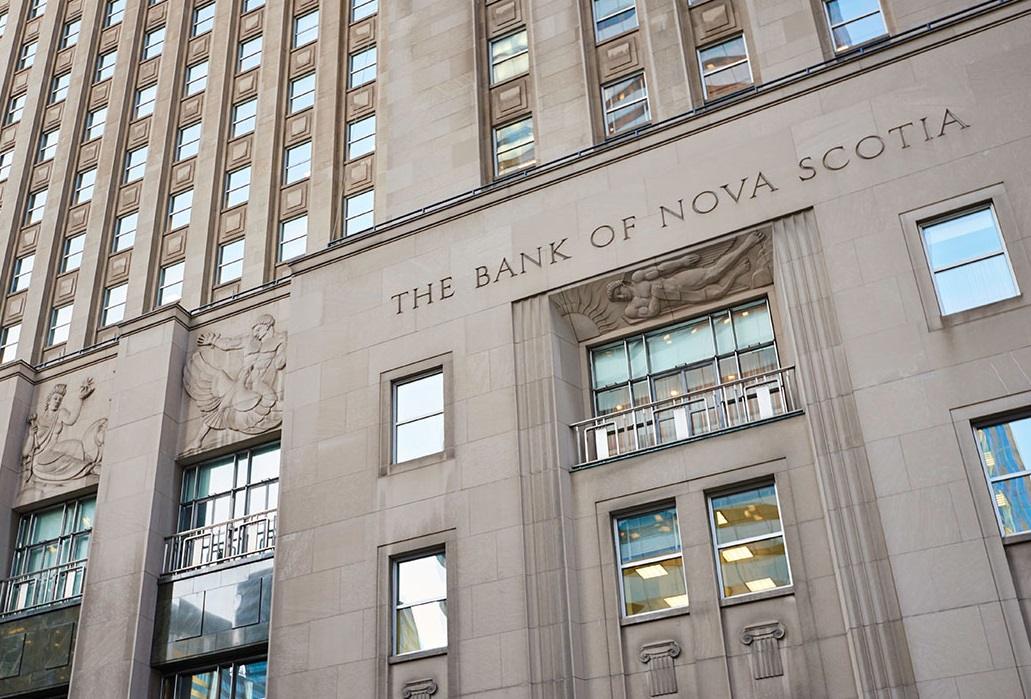
Canadian banks Scotiabank and RBC revealed that they have retired their 2030 targets to reduce financed emissions for key carbon-intensive sectors, with each bank citing external factors ranging from changes in public policy, energy demand, and slower than requires technology development.
Scotiabank also announced that it is dropping its goal to achieve net zero for financed emissions by 2050, while RBC has maintained its 2050 target.
The announcements, made in each of the banks’ sustainability reports, form the latest in a series of moves by Canadian banks to pull back from climate commitments over the past year, as the political environment, particularly in the U.S., has evolved to make progress towards net zero more challenging, and has seen banks come under pressure from politicians over sustainability goals and participation in climate-focused groups.
Both Scotiabank and RBC, alongside their big bank Canadian peers, joined the Net-Zero Banking Alliance (NZBA) in 2021, which required signatories to commit to align operational and attributable emissions from their portfolios with pathways to net zero by 2050. As part of their net zero commitments, in 2022 and 2023, the banks each set interim 2030 financed emissions reduction goals for the Oil & Gas, Power & Utilities, and Automotive sectors.
As political pressure built up, however, each of the Canadian banks left the NZBA in early 2025. The NZBA subsequently ceased operations later in 2025.
RBC also announced last year that it had retired its goal, first set in 2021, to mobilize $500 billion in sustainable finance by 2025, following changes to greenwashing regulations in Canada.
Scotiabank set a goal in 2022 to mobilize $350 billion in capital for climate-related finance by 2030. The bank’s goal is still in place, and the sustainability report revealed that Scotiabank mobilized $40 billion in climate-related finance in 2025, achieving $212 billion towards its goal.
In its new report, Scotiabank said after evaluating its financed emissions targets, and the underlying assumptions in areas including public policy, energy demand, and technology development and deployment, it determined that “these factors have not evolved to the extent expected and reflected in those assumptions and, taking into account current conditions and trends, there is much uncertainty as to their future path.”
The bank added:
“Accordingly, we have decided that, as of fiscal 2026, we are withdrawing our Interim Targets and our goal to achieve net-zero by 2050 for financed emissions.”
Similarly, RBC’s report stated that the bank initiated a review of its interim targets in 2024, with a focus on factors “related to government policy, regulatory frameworks, technological advancement, geopolitical developments, and energy demand and security,” leading the bank to conclude that “the changing and uncertain operating environment makes some of our Interim Targets not reasonably achievable and the outlook for others unclear, and adding that, “as a result, we have made a decision to retire our Interim Targets.”
RBC said that it would continue to report on its financed emissions for the sectors, and that it maintained its ambition to achieve net zero in its lending by 2050, adding:
“Achieving this ambition will require a supportive external environment, including government policy and advances in technologies required for net-zero, alongside continued access to capital to facilitate innovation and adoption of these climate solutions. We will continue to recalibrate our strategy where appropriate to reflect changing circumstances.”