
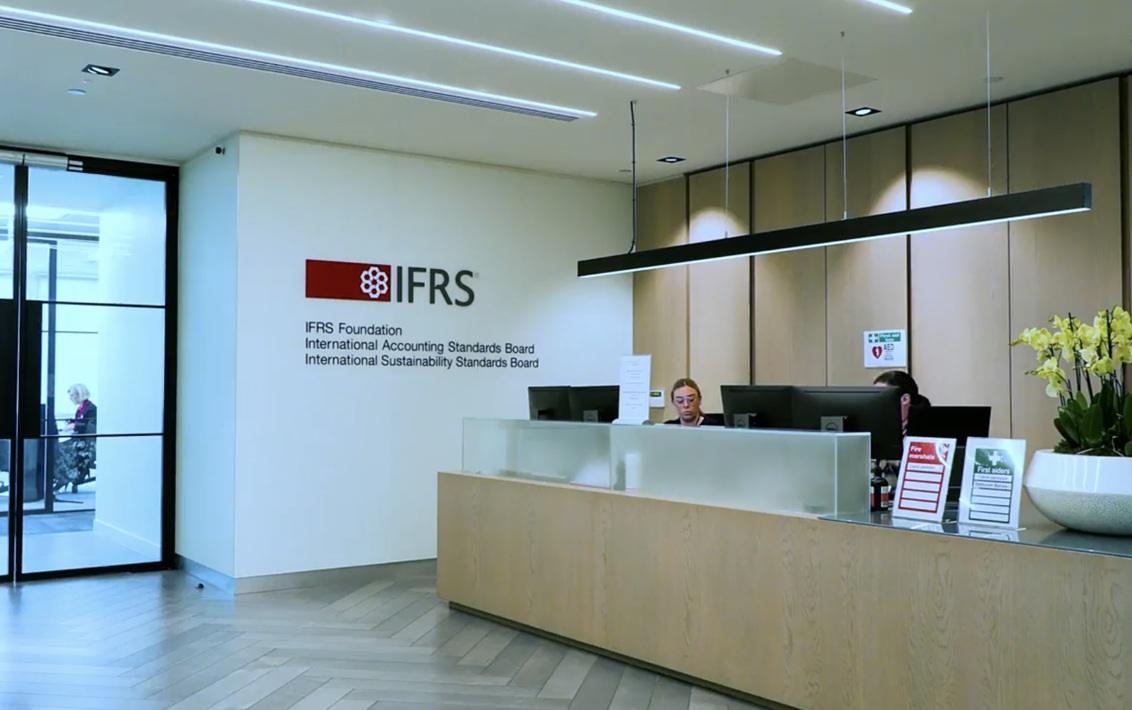
The IFRS Foundation and the Global Reporting Initiative (GRI) released a new statement reaffirming their commitment to work together to align GRI and ISSB sustainability reporting standards as part of their joint efforts to enable a seamless, global and comprehensive sustainability reporting system.
The new statement describes the common disclosures that the GSSB and ISSB have been working together to align, including identifying instances where the same information is relevant for meeting the distinct purposes of each standard, and highlights focus areas for continued alignment efforts, such as nature-related and sector-specific disclosures.
The International Sustainability Standards Board (ISSB) was launched in November 2021, with the goal to develop IFRS Sustainability Disclosure Standards to provide investors with information about companies’ sustainability risks and opportunities. The IFRS released the inaugural general sustainability (IFRS S1) and climate (IFRS S2) reporting standards in June 2023.
The IFRS Foundation’s International Sustainability Standards Board (ISSB) released its inaugural general sustainability (IFRS S1) and climate (IFRS S2) reporting standards in June 2023, with a focus on providing investors with material financial information about companies’ sustainability-related risks and opportunities.
GRI Sustainability Reporting Standards are one of the most commonly accepted global standards for sustainability reporting by companies, with a focus on providing information about their most significant impacts on the economy, environment and people, and their contributions to sustainable development.
The organizations launched an initial collaboration in 2022 aimed at ensuring compatibility and interconnectedness of sustainability-related disclosures, in order to help reduce the reporting burden on companies complying with multiple standards, and in 2024, expanded the collaboration with a commitment to jointly identify and, where possible, align common disclosures with the aim of reducing duplication, fragmentation and complexity for companies and sustainability reporting users.
The new statement notes that despite the distinct purposes of the ISSB and GRI standards, the disclosure requirements of the standards overlap in several areas, noting for example the ability for entities reporting in compliance with IFRS S2 to measure Scope 1, Scope 2 and Scope 3 GHG emissions using the GHG Gas Protocol standard to also to meet the corresponding requirements of GRI’s climate change standard, GRI 102.
While noting the common disclosures, the statement also highlighted the complementary nature of the standards, given their distinct mandates, with the organizations outlining as an example how GRI 102’s disclosures on the impacts of transition plans and climate adaptation complement the risk and opportunity-focused disclosures in IFRS S2, providing stakeholders with both information on information on impacts that may not be material in accordance with the ISSB Standards, but may be relevant to investors with a mandate beyond financial return alone.
The statement also highlights areas where the IFRS Foundation and GRI are continuing to work together to support efficient reporting, including the ISSB’s work on nature-related disclosures and the ongoing interoperability work between GRI and TNFD, the development of GRI sector standards and the ISSB’s work to enhance the sector-focused SASB Standards, the ISSB’s research project on human capital disclosures, and the revision of the GRI’s labor-related standards and disclosures.
The organizations said that the new statement was agreed following a meeting between ISSB Chair Emmanuel Faber and GSSB Chair Susanne Stormer last week.
Stormer said:
“I see the role of standard-setters as enabling organisations anywhere to determine what to disclose, for which purpose and audience, so they can report data that is meaningful, consistent and comparable. The commitment by GRI and the IFRS Foundation to facilitate efficient sustainability disclosures can support that aim, and I look forward to expanding our collaboration with the ISSB.”
Faber added:
“It was a pleasure to have a first substantial meeting with Susanne to discuss and advance our shared commitment to facilitate more efficient reporting. Our ongoing work will deliver tangible benefits for entities that use both GRI and ISSB Standards.”
Click here to access the joint statement.