
- Turkey is seeking a global coalition behind a voluntary target to raise electricity’s share of total world energy demand from 20% to 35% by 2035.
- The initiative, tied to COP31 in Antalya this November, targets electrification of transport, heavy industry, and home heating to displace oil, coal, and gas consumption.
- Geopolitical volatility from the Iran conflict is already accelerating EV adoption across South Korea, Japan, and Italy, lending urgent real-world momentum to the proposal.
A Host Nation With an Agenda
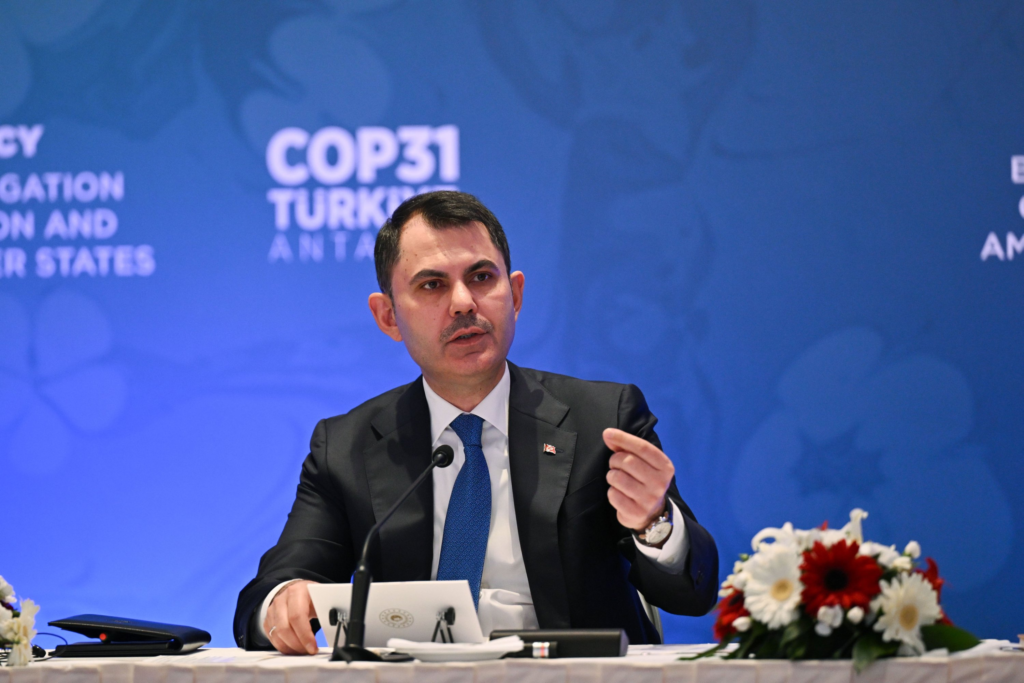
With less than five months before the COP31 climate conference opens on its shores, Turkey is moving to define the summit’s centrepiece outcome. Turkish Environment Minister Murat Kurum announced this week that Ankara will seek multilateral backing for a voluntary target to lift electricity’s share of global energy demand from roughly 20% today to 35% by 2035. The mechanism: electrifying the systems that still run directly on fossil fuels — industrial furnaces, passenger vehicles, and residential heating.
The ambition is concrete and numerically bounded, which sets it apart from much of the declaratory language that tends to dominate COP proceedings. Whether it can survive the negotiating floor is a different question.
The Logic of Electrification
The economic and climate rationale is straightforward. Electricity decarbonises faster than any other energy sector, and electrifying end-use demand locks in those emissions reductions at scale. Every heat pump installed, every electric arc furnace commissioned, every EV sold shifts consumption away from combustion and toward a grid that is progressively cleaner.
But the logic has a significant caveat. Electrification is only as clean as the grid behind it. France and Sweden, drawing heavily on nuclear and renewables, offer near-zero-emission electricity. China and India, which continue to expand coal capacity, do not. A 35% electrification target set without parallel commitments on power sector decarbonisation could, in theory, increase coal burn in high-growth economies. Turkey’s proposal will need to address this tension directly to hold up under scrutiny.
Building a Coalition, Not a Treaty
The voluntary framing is deliberate. With nearly 200 countries participating in COP31, Turkey is not seeking a binding agreement — it is seeking a coalition. Kurum framed the effort in development terms as much as climate terms.
“We will also work closely with all countries, especially with developing economies, to help facilitate access to technical assistance, capacity-building, and financial support in line with this goal,” he said.
That framing matters. Emerging markets face the highest structural barriers to rapid electrification: capital costs, grid infrastructure deficits, and industrial transition timelines that extend well beyond 2035. A target without credible finance attached risks repeating the pattern of climate commitments that falter in implementation. What Turkey tables in terms of finance architecture — and which multilateral development banks or sovereign wealth funds it can bring along — will determine whether this stays aspirational or becomes operational.
RELATED ARTICLE: Turkey Raises Greenhouse Gas Emission Reduction Target for 2030
Geopolitics as Accelerant
There is a live tailwind that did not exist at previous COPs. The Iran conflict and its disruption to regional oil and gas markets have produced a measurable demand surge for EVs in South Korea, Japan, and Italy. Consumers exposed to fuel price volatility are making the switch; the conflict has compressed what would have been a years-long adoption curve into months in some markets.
For C-suite leaders and institutional investors, this is material. It changes the timeline on fleet electrification investment decisions. It changes the risk profile of long-term fossil fuel supply contracts. And it reinforces what the IEA has been arguing for several cycles: the energy transition is increasingly driven by energy security calculus, not just climate policy.
Governance Context: A Split Presidency
COP31 runs under an unusual structure. Turkey will host the conference in Antalya, while Australia will manage the formal UN climate negotiations that constitute the conference’s legal core. The arrangement reflects the competing bids for hosting rights. In practice, it means Turkey’s ability to shape outcomes depends more on coalition-building and agenda-setting than on procedural control. The 35% electrification push is, in part, a play for diplomatic relevance within that constraint.
What Investors and Executives Should Watch
The proposal will test whether a voluntary electrification target can attract the institutional support needed to move capital. For ESG-focused investors, the key signals to track are: which national governments formally endorse the target in the lead-up to Antalya; what financial commitments emerge around technology transfer to developing economies; and how the initiative intersects with existing national NDCs submitted under the Paris Agreement. A 35% electricity share by 2035 is achievable on current trajectories in some markets. In others, it requires structural policy intervention. The gap between the two is where the investment opportunity — and the governance risk — sits.
The post Turkey Proposes Global 35% Electricity Target by 2035 Ahead of COP31 Antalya Summit appeared first on ESG News.