
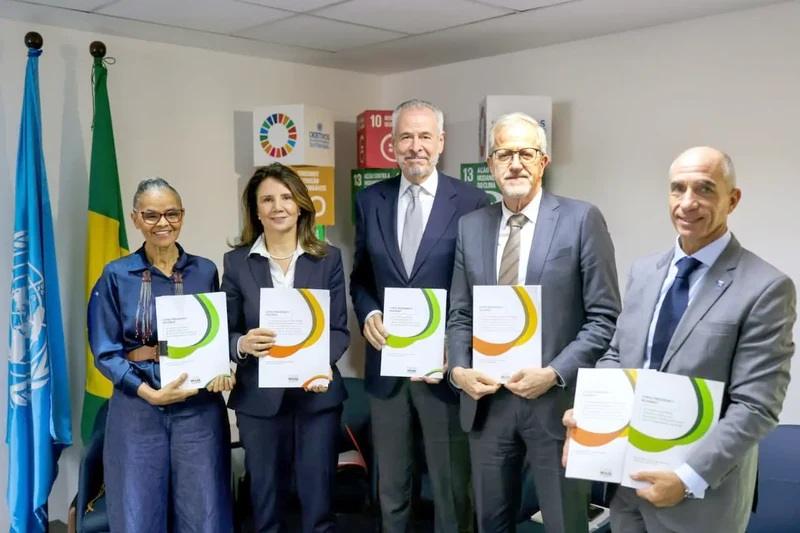
COP30 host Brazil announced the release of two new “Roadmaps,” outlining global strategies to transitioning away from fossil fuels in energy systems, and to halt and reverse deforestation and forest degradation by 2030.
The new roadmaps were released in the leadup to the COP31 conference, following an unsuccessful push by several countries at COP30 last year to include a reference to a roadmap away from fossil fuels in the final agreement. At the conclusion of COP30, the Brazil presidency committed to create science-based roadmaps over the next year on the transition away from fossil fuels and on halting deforestation, although these would be voluntary, and sit outside of the UN system. Fossil fuels and deforestation are key drivers of climate change, with energy accounting for 75% of global greenhouse gas (GHG) emissions, and forest loss for 11%, according to the COP30 Presidency.
The fossil fuel roadmap centers on “the “Belém Readiness Approach, which examines countries’ exposure to fossil fuels and their capacity to manage the transition across complementary pillars including energy demand, covering energy use in transport, industry, and buildings; supply, assessing how fossil fuel production can adapt as low-emissions energy systems expand and demand declines, and; the broader economy, addressing fiscal dependence, investment, the cost of capital, and price signals, among other topics. The roadmap acknowledges a need for careful coordination for the transition, with reductions in fossil fuel production required to be match declining demand while low-emissions energy systems expand sufficiently to maintain reliable and affordable energy.
Three key proposals outlined in the fossil fuel roadmap include encouraging countries, subnational governments and sectors to start now using the Belém Readiness Approach to assess their circumstances and identify priorities; launching a collective agenda to accelerate coordinated action in this critical decade, and sustaining international dialogue and cooperation, including through future COP Presidencies and the Global Stocktake.
The deforestation roadmap covers tropical, subtropical, temperate, and boreal forests, as well as forest-related ecosystems such as peatlands and mangroves, and also highlights forest degradation, which cause forests to lose their capacity to store carbon, regulate water, support biodiversity and sustain livelihoods.
The Roadmap identifies five complementary areas of action in national strategies, including conservation, sustainable forest management, agroforestry and bioeconomy, combating forest degradation, combating deforestation, and restoration, reforestation and afforestation, and presents a series of proposals, including improving forest information and monitoring systems, strengthening technical assistance and capacity-building, combating transnational environmental crime, and promoting trade incentives that reward sustainable and deforestation-free production.
The deforestation roadmap also identifies finance as one of the largest implementation gaps, citing UNEP research indicating that annual forest finance must rise from $84.5 billion in 2023 to more than $300 billion per year by 2030. Examining a broad range of international forest financing mechanisms, such as REDD+ and the Tropical Forest Forever Facility (TFFF), the document finds that many existing instruments operate below their potential, pointing to the need to scale financing, improve access and reward countries and communities for conservation and sustainable forest management.
Click here to access the new fossil fuel and deforestation roadmaps.
Image credit: COP30 Presidency