- EnBW’s dual green hybrid bond sale drew demand ten times higher than supply, reflecting strong global appetite for energy transition financing.
- Proceeds will fund renewable generation, EV charging networks, and grid expansion under a formal Green Financing Framework.
- Hybrid instruments classified as 50% equity strengthen EnBW’s balance sheet as it prepares for up to €50 billion in energy system investment through 2030.
Strong Demand Signals Investor Confidence In Transition Financing
EnBW has raised €1 billion through two green hybrid bond issuances, accelerating financing for one of Europe’s largest utility transition strategies. The transaction attracted broad international participation and was oversubscribed ten times at peak demand, highlighting continued institutional appetite for structured green debt tied to real infrastructure deployment.
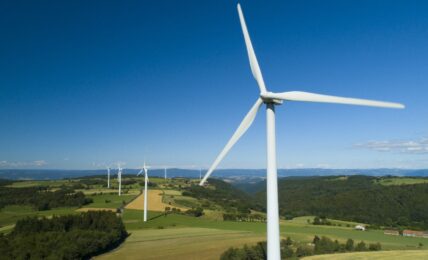
The bonds sit within EnBW’s Green Financing Framework, allowing the company to allocate proceeds across its integrated energy portfolio. Funding will support solar farms, onshore and offshore wind projects, grid expansion and fast charging infrastructure for electric vehicles. According to the company, investments are limited to projects aligned with climate friendly criteria, reinforcing its push toward a climate neutral energy system.
The issuance also permanently increases EnBW’s hybrid bond volume from €2.5 billion to €3.5 billion, a strategic move designed to balance growth ambitions with credit stability.
Hybrid Structure Strengthens Balance Sheet Strategy
Hybrid bonds occupy a unique position between debt and equity, making them a favored tool among European utilities financing capital intensive decarbonization programs. Moody’s and Standard & Poor’s classify EnBW’s hybrids as 50% equity, helping protect rating metrics as investment accelerates. The company currently holds a Baa1 rating from Moody’s and an A- rating from S&P.
Marcel Münch, Senior Vice President Finance, M&A and Investor Relations, said: “With this transaction, we have permanently increased our hybrid volume from €2.5 billion to €3.5 billion. This strategic step strengthens our balance sheet for the long term and increases our financial flexibility for implementing the largest investment program in EnBW’s history.”

For investors, the structure provides long dated exposure to the European energy transition while supporting issuer credit profiles. For utilities, hybrids offer a mechanism to finance grid modernization and renewables without placing excessive strain on leverage ratios.
RELATED ARTICLE: EnBW and Investors to Commit €2.4 Billion for Offshore Wind Farm
Financing A €50 Billion Transformation Program
The bond sale comes as EnBW advances an ambitious investment plan of up to €50 billion between 2024 and 2030 aimed at reshaping its generation mix and expanding network infrastructure. The company estimates it will require between €2.5 billion and €3 billion in annual financing to execute this strategy.
Marcel Münch added: “With the current bond issue and the pre-funding last fall, we have already covered a large part of our financing needs for 2026.”
The early execution of financing reflects a broader trend among European utilities seeking to secure capital ahead of expected market volatility, rising grid costs and evolving regulatory frameworks tied to energy security. Germany’s transition policies, combined with electrification demand and industrial decarbonization targets, are increasing pressure on utilities to scale investment rapidly.
Bond Structure And Market Implications
EnBW issued two €500 million tranches, each with a 30 year maturity. The first carries an initial coupon of 3.625% with a first redemption option in 2031, while the second offers a 4.5% initial coupon and a first redemption option in 2035. The bonds are scheduled to settle on 10 February 2026.
Long duration hybrid instruments remain attractive to ESG focused investors seeking stable yields tied to climate aligned infrastructure. At the same time, the financing illustrates how utilities are reshaping capital structures to manage transition risk while funding large scale electrification projects.
For executives and institutional investors, the transaction reflects a maturing green finance market where demand extends beyond traditional green bonds into more complex hybrid structures. As utilities confront rising grid expansion costs and accelerating renewable deployment timelines, access to flexible financing will increasingly determine who can execute transition strategies at scale.
EnBW’s latest issuance highlights how governance, financing innovation and climate policy are converging in Europe’s power sector. With significant capital already secured for 2026, the company enters the next phase of its investment cycle with stronger financial flexibility and a clearer pathway toward building a climate neutral energy system.
Follow ESG News on LinkedIn
The post EnBW Issues $1 Billion Green Hybrid Bonds To Finance Climate Neutral Grid, Renewable Expansion appeared first on ESG News.