
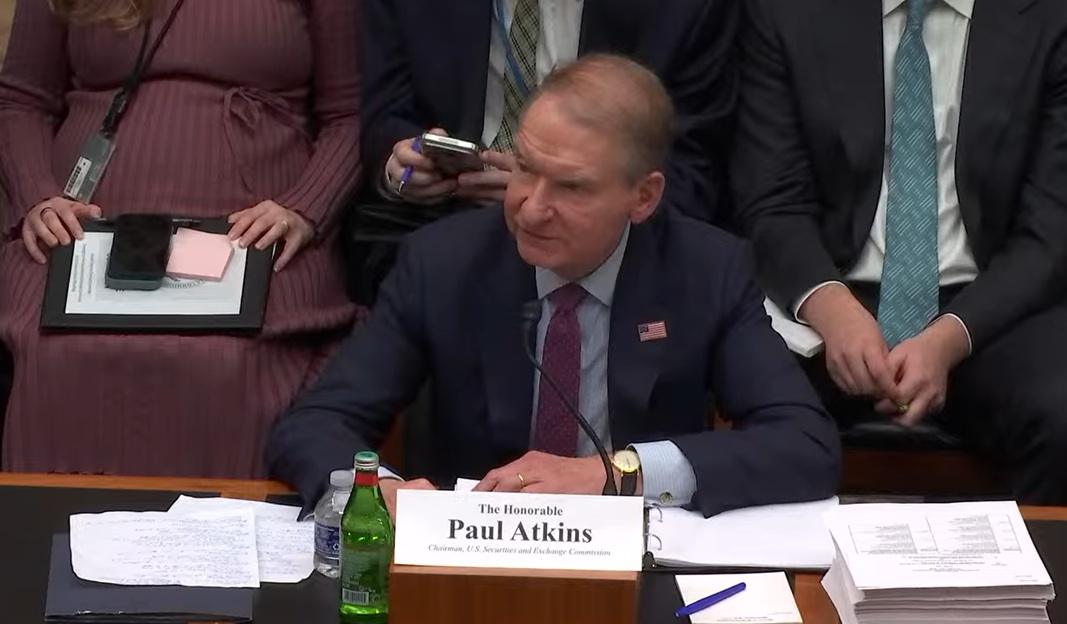
The U.S. Securities and Exchange Commission (SEC) has placed anti-greenwashing rules put in place by the Commission during the Biden administration setting criteria for ESG and sustainability-labelled investment funds under review, according to comments by SEC Chair Paul Atkins.
Testifying at a hearing by the U.S. House Financial Services Committee, when asked about finalized rules passed by the SEC under prior Biden-appointed Chair Gary Gensler “that have a significant operational and compliance implications,” including the “Names Rule,” Atkins replied that he has “asked my division directors and their staffs to review rules… the Names Rule is one example of all that.”
Atkins did not provide any details or timelines regarding the review.
The rules, introduced in 2023, amended the Names Rule – initially adopted in 2001 to prevent fund names from misrepresenting their inherent investments and risks – to add new requirements for investment companies with names that suggest a focus on a certain type of investment to adopt a policy to invest at least 80% of the value of their assets in those investments.
While not applying only to sustainability-focused funds, the ruling focused heavily on ESG funds, noting the growing potential for greenwashing due to the wide range of ESG-related terms and evolving investor expectations, and with the Commission at the time highlighting the use of ESG-related terms such as “sustainable” or “green” as presenting “particular investor protection concerns.”
The review of the 2023 Names Rule amendments would mark the latest in a series of moves by the Commission under Atkins to revisit sustainable investing-related initiatives put in place by the SEC during the Biden administration, including dropping its defense of new climate reporting rules, and making it easier for companies to block shareholder proposals, as well as recently announcing plans to examine proxy voting firms for their support of ESG initiatives.
Asked again later at the hearing about “how the Commission is addressing recent rulemakings that impose significant costs with limited benefits – one example is the 2023 fund Names Rule amendments,” Atkins said the Commission is reviewing rules that “add costs to investors, so it’s good to have a retrospective view to weed out things that are not fit for purpose.”