- IATA calls for full alignment with CORSIA to avoid fragmented carbon markets and rising compliance costs for airlines
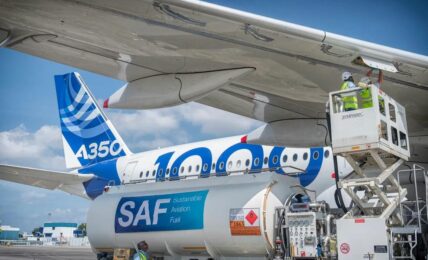
- SAF investment gap could reach up to $407 billion by 2050, with current EU support covering only a fraction of demand
- Aviation expected to generate billions in EU ETS revenues, but limited reinvestment risks slowing decarbonization
Brussels faces renewed pressure to recalibrate its flagship carbon market as the aviation sector warns that current rules risk undermining both competitiveness and decarbonization. The International Air Transport Association (IATA) is calling for a targeted review of the EU Emissions Trading System (EU ETS), arguing that overlapping policies, high compliance costs, and insufficient reinvestment are constraining Europe’s aviation transition.
The intervention comes at a sensitive moment for EU policymakers. Questions over industrial competitiveness are intensifying across sectors, reinforced by the Draghi Report’s warning that regulatory complexity and underinvestment are eroding Europe’s economic resilience. For aviation, the stakes extend beyond climate alignment to the preservation of connectivity, trade flows, and geopolitical positioning.
“European aviation policy must bolster competitiveness as it advances decarbonization. Reviewing the EU ETS offers a critical opportunity to refocus efforts on cost-effective emission reductions. The priority must be the full implementation of CORSIA, the reinvestment of EU ETS revenues into SAF and other credible decarbonization solutions, and the elimination of overlapping measures that add cost and complexity without environmental gain. By doing so, we will protect European air connectivity—a vital strategic asset foundational to EU integration, trade, and commerce. Amid global economic strain and geopolitical volatility, the EU ETS review must deliver a harmonized climate policy framework that balances the sector’s competitiveness with its climate ambitions,” said Willie Walsh, IATA’s Director General.

CORSIA Alignment Seen as Critical to Avoid Market Fragmentation
At the core of IATA’s position is the need for full implementation of the Carbon Offsetting and Reduction Scheme for International Aviation (CORSIA), the global market-based mechanism agreed through the International Civil Aviation Organization.
Airlines argue that layering EU-specific rules on top of CORSIA creates duplicative costs without delivering additional emissions reductions. Extending EU ETS obligations to intra-European Economic Area routes, while maintaining separate compliance requirements, risks fragmenting carbon markets and weakening global coordination.
Aviation executives warn that failure to fully align with CORSIA could undermine the integrity of international climate frameworks while increasing administrative burdens. A harmonized approach, without additional EU-specific eligibility criteria for emissions units, is viewed as essential to maintaining predictability for operators and investors.
RELATED ARTICLE: IATA Launches Global Integrated Sustainability Program for Airlines
SAF Book-and-Claim Model Gains Momentum
IATA is also urging policymakers to enable a Sustainable Aviation Fuel (SAF) book-and-claim system within the EU ETS. The mechanism would allow airlines to claim emissions reductions based on SAF purchases, regardless of where the fuel is physically used.
Such flexibility is seen as critical in a market where SAF supply remains geographically concentrated and significantly more expensive than conventional jet fuel. By separating environmental attributes from physical delivery, a book-and-claim system could unlock demand, improve liquidity, and support scaling of production.
To operationalize the model, IATA is calling for amendments to the EU ETS Directive and an expansion of the Union Database to track both physical fuel flows and associated emissions attributes. This infrastructure would help prevent double counting while increasing transparency across the value chain.
Billions in ETS Revenues, Limited Reinvestment
The financial dimension of the debate is becoming harder to ignore. Following the phase-out of free allowances in 2024, airlines face a sharp increase in compliance costs. Between 2026 and 2030, the sector is expected to surrender nearly 330 million allowances, generating billions of euros in revenues for EU Member States.
Yet industry leaders argue that only a small share of these funds is being redirected toward aviation decarbonization. The current SAF Allowance scheme is expected to cover just 4 to 5 percent of industry needs over the same period, leaving a substantial funding gap.
Investment requirements remain significant. Estimates from the Sustainable Transport Investment Plan place the cost of meeting EU SAF targets at between $62 billion and $73 billion by 2035, rising to between $291 billion and $407 billion by 2050. Redirecting ETS revenues toward SAF production and emerging technologies is viewed as one of the most immediate levers available to policymakers.
Balancing Climate Ambition with Industrial Resilience
IATA is also advocating for a reassessment of cost exposure, including the potential reinstatement of free allowances to safeguard competitiveness. Industry leaders caution that a rapid escalation in compliance costs could weaken European carriers relative to global competitors, reduce connectivity, and ultimately divert capital away from long-term decarbonization investments.
The broader policy question for Brussels is how to align climate ambition with economic resilience. Aviation sits at the intersection of both, linking regions, enabling trade, and supporting strategic industries.
For executives and investors, the direction of EU ETS reform will shape not only compliance costs but also capital allocation, fuel markets, and long-term infrastructure investment. A fragmented policy landscape risks slowing progress, while a coordinated framework could accelerate both emissions reductions and industrial competitiveness.
As geopolitical tensions and supply chain disruptions persist, Europe’s ability to maintain strong air connectivity while decarbonizing its aviation sector will remain a defining test of its climate and economic strategy.
Follow ESG News on LinkedIn
The post IATA Urges EU ETS Overhaul to Protect Aviation Competitiveness, Accelerate Decarbonization appeared first on ESG News.