
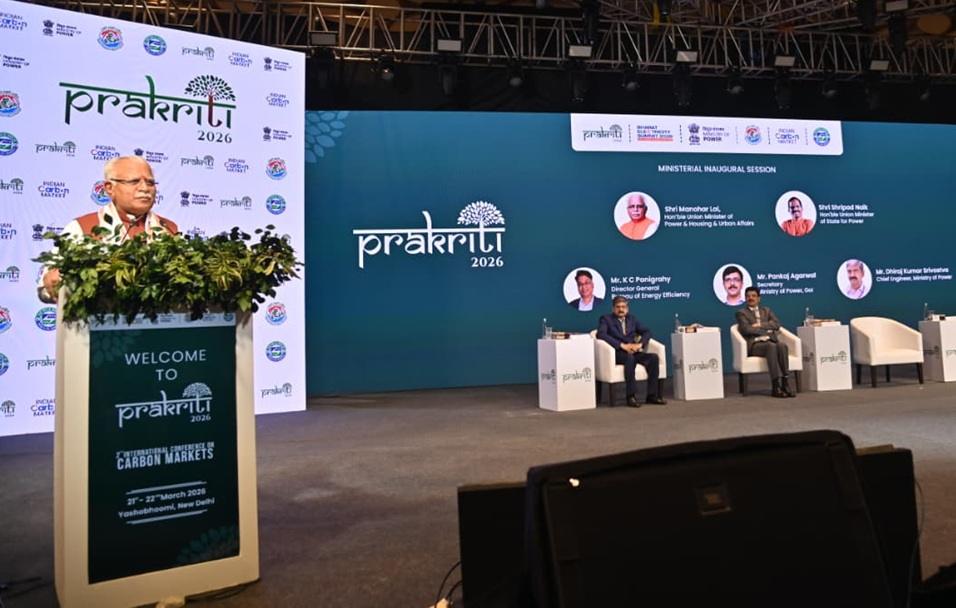
The government of India announced the launch of the Indian Carbon Market Portal, a new central platform for the implementation and administration of the Carbon Credit Trading Scheme (CCTS), handling registration, monitoring, reporting, and verification (MRV) of carbon emissions across all participating industries.
Announcing the launch of the new platform, Union Power Minister Manohar Lal also revealed that formal carbon credit trading on the portal will begin within the next four months.
India passed legislation in 2022 allowing for the creation of a carbon market in the country to centralize the trading of carbon and environmental credits across industries, with the central government or an authorized agency issuing carbon credit certificates, and entities able to sell credits if they exceed their minimum energy efficiency or clean energy thresholds, or buy credits to cover requirements that they haven’t yet achieved.
Following the legislation, India’s Carbon Credit Trading Scheme, the legal foundation of the carbon market, was developed in 2023, establishing the Compliance Market, which covers 490 large industrial units across 7 energy-intensive sectors that are assigned Greenhouse Gas Emission Intensity (GEI) targets by the Bureau of Energy Efficiency, with entities outperforming targets earning Carbon Credit Certificates, and those underperforming required to purchase the certificates from the market. The CCTS also includes a voluntary offset market open to all entities, enabling projects in renewable energy, biogas, green hydrogen, afforestation, and waste management to register and earn tradable carbon credits.
Notably the launch of the carbon market will enable Indian companies to demonstrate compliance with external carbon pricing schemes such as the EU’s Carbon Border Adjustment Mechanism (CBAM).
According to Lal, the CCTS and portal will be overseen by the Bureau of Energy Efficiency, with participants in the market required to register on the platform, where emissions and compliance obligations will be assessed, and surplus certificates can be traded. To date, Lal said that nine methodologies are currently available under the offset mechanism, with over 40 institutions already registered, submitting projects in biogas, hydrogen and forestry.
Lal said:
“While carbon markets themselves do not directly reduce emissions, they create a mechanism between different groups—those who emit more and those who emit less, those who comply early and those who delay. Those with surplus carbon certificates can sell them, while those lacking them can purchase certificates to meet their obligations.
“This creates an incentive to achieve our targets, while also aligning with our traditional values of maintaining balance with nature. It encourages everyone to understand their responsibility and move toward carbon neutrality.”