
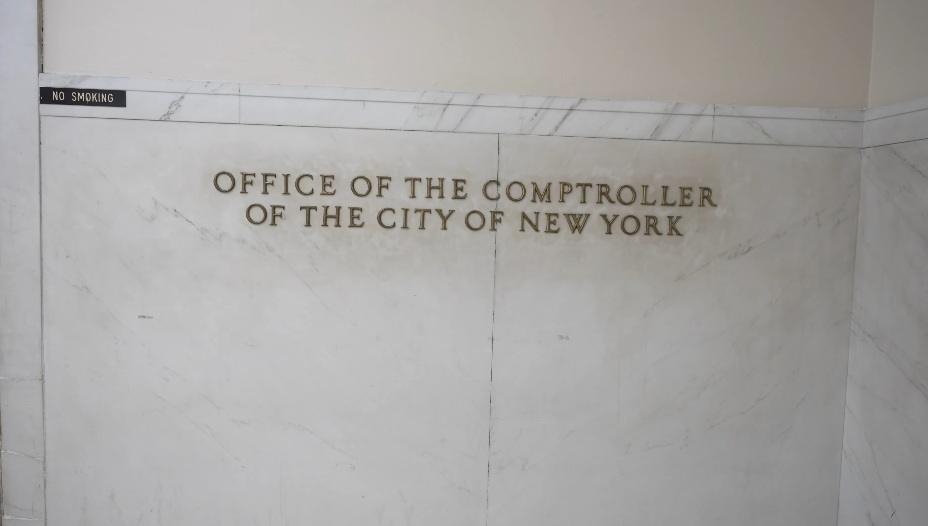
New York City Comptroller Mark Levine announced that the city’s public pension systems have cut their portfolio greenhouse gas emissions footprint by nearly half by the end of fiscal year 2025, putting the funds well ahead of their interim targets towards their 2040 net zero goals.
Alongside the financed emissions reduction results, Levine also revealed significant progress in the systems’ engagement with asset managers, with nearly all public markets asset managers agreeing to align with expectations to adopt a net zero goal, science-based targets, or acceptable alternative approach to support a transition to a net zero economy.
New York City’s pension funds represent nearly $300 billion in assets – making them collectively one of the largest pubic pension systems in the U.S. – and include the New York City Employees’ Retirement System (NYCERS), Teachers’ Retirement System (TRS), and Board of Education Retirement System (BERS). The Comptroller is the investment advisor to and custodian of assets of the city’s pension funds.
In 2022, the NYC pension boards launched a Net Zero Implementation Plan, including a goal to achieve net zero emissions by 2040, and a requirement for asset managers to submit net zero plans by the end of June 2025. Last year, former Comptroller Brad Lander increased demands on asset managers to align their investments with the city’s climate goals, including requirements to submit strong net zero action plans, and to set expectations for all portfolio companies to set full value chain net zero goals.
In December 2025, Lander said that 46 of the pensions system’s 49 investment managers submitted sufficient decarbonization plans, but issued recommendations to drop mandates with BlackRock, Fidelity and Pangora, over the asset managers’ failure to submit decarbonization plans that were aligned with the pension system’s net zero investment goals.
In the new report, the Comptroller’s office revealed a 48.13% weighted average reduction in Scope 1 and 2 financed greenhouse gas emissions for the 3 pension systems, with TRS, NYCERS and BERS achieving a total reduction of Scopes 1 and 2 financed emissions intensity in their public equity and corporate bonds portfolios of 49%, 46.68% and 45.72% respectively, since the end of 2019, beating their respective goals of 32%, 32% and 22% by 2025.
In the update, the office also said that all of the systems’ public markets asset managers submitted plans in response to expectations, and that the system has also set expectations for all private markets asset managers of funds undergoing due diligence to submit plans for alignment with the systems’ net zero goals.
The Comptroller also noted that the public pension systems saw a 10.3% net return in 2025, while achieving the decarbonization results.
Levine said:
“The climate crisis has a direct impact on our global economy, and our pension systems are doing the hard work of protecting retirees while advancing a transition to a low-carbon economy. The progress laid out in this report is a reflection of the important role that reducing emissions exposure, investing in the clean energy transition, and holding companies accountable plays in smart pension management.”