
- Temasek’s portfolio emissions reached 21 million tonnes in FY2025, close to its 2010 baseline of 22 million tonnes and above its 2030 target of 11 million tonnes.
- More than 80% of portfolio emissions come from five major holdings, with Singapore Airlines and Sembcorp Industries accounting for the largest shares.
- The firm will keep its 2050 net-zero ambition and has expanded sustainability-aligned investments to $46 billion for FY2025.
Temasek is unlikely to meet its 2030 emissions target as aviation, power generation and global energy demand complicate the investor’s decarbonisation path.
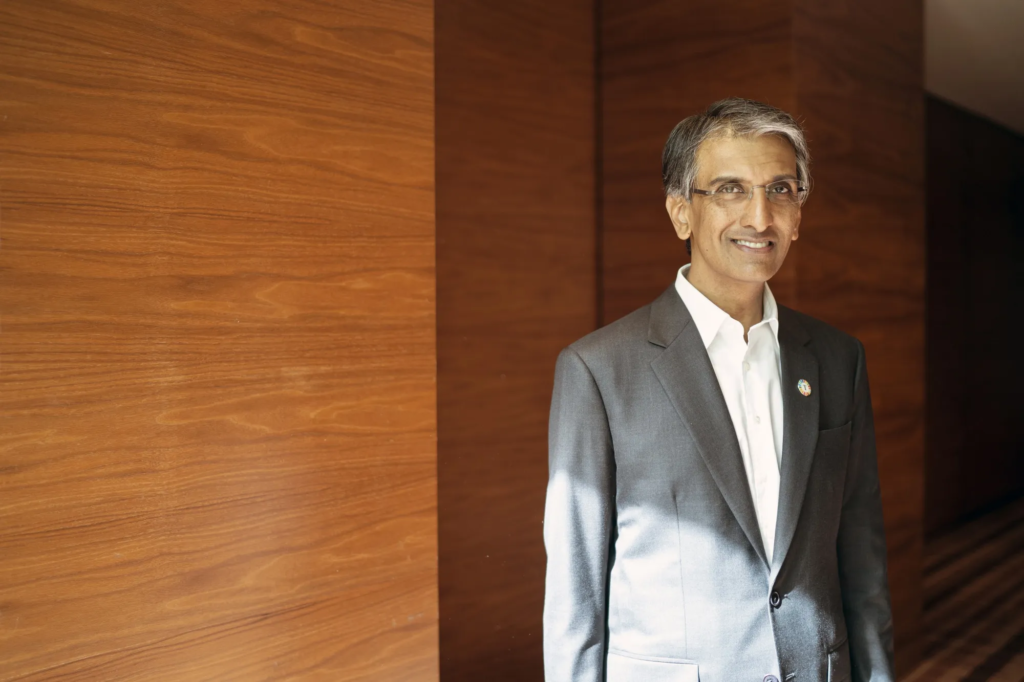
Chief executive Dilhan Pillay told the opening dinner of Temasek’s annual Ecosperity conference on May 18 that the investment group still intends to pursue its 2050 net-zero ambition. However, he said near-term progress has become harder under current technology, market and geopolitical conditions.
Temasek had aimed to halve portfolio emissions to 11 million tonnes by 2030, down from 22 million tonnes in 2010. Its FY2025 portfolio emissions stood at 21 million tonnes. Own operational emissions were far smaller, at about 19,700 tonnes.
The firm has made progress on carbon intensity. Since 2010, it has reduced the carbon intensity of its investments by 52%. That means its portfolio companies emit less for every dollar of value. Yet absolute emissions remain stubborn because several core holdings operate in sectors where low-carbon alternatives remain costly or limited.
More than 80% of Temasek’s portfolio emissions come from five companies: Singapore Airlines, Sembcorp Industries, Olam Group, PSA International and ST Telemedia. Singapore Airlines, in which Temasek holds a 53% stake, contributed 43% of total emissions. Sembcorp, which operates natural gas power plants in Singapore, accounted for 22%.
Hard-To-Abate Sectors Drive The Gap
Pillay said Temasek does not plan to revise its 2030 target. Instead, the target will now serve as a directional marker as the investor works through an uneven transition.
“Fossil fuels remain entrenched in hard-to-abate sectors such as steel, cement, power, aviation, shipping. And global energy demand continues to rise,” said Mr Pillay.
For Temasek and its portfolio, the transition to net zero “will be far more uneven, contested, and non-linear than previously anticipated”, he said.
Aviation remains one of the most difficult sectors to decarbonise because aircraft still depend heavily on jet fuel. Sustainable aviation fuel is viewed as central to lowering emissions, but supply remains limited and costs remain high.
Pillay said SAF accounts for less than 1% of global jet fuel supply. It also costs around two to five times more than traditional jet fuel. Singapore aims for SAF to form 1% of all jet fuel used at Changi and Seletar airports in 2026, rising to 3% to 5% by 2030.
Singapore Airlines has the second-lowest emissions among South-east Asian carriers, according to the source material. In cargo operations, its fuel-efficient planes are expected to reduce emissions by about 400,000 tonnes annually. Still, fleet efficiency alone cannot deliver a deep aviation transition.
Power generation poses another constraint. Renewables will drive most new energy capacity over time, but thermal power still supports grid stability and affordability during the transition.
AI, Geopolitics And Capital Competition Raise The Stakes
Pillay said the assumptions that shaped transition planning a decade ago have weakened. When Ecosperity began in 2014, the prevailing view was that policy, innovation and capital would converge. That would reduce carbon abatement costs and support a path to net zero by 2050.
Today, that outlook is more fragile.
Mr Pillay said: “The global energy transition has entered a far more complex and uncertain phase, with geopolitics reshaping markets. Recent events in the Gulf are a stark reminder that fossil fuel systems remain highly vulnerable to geopolitical shocks and supply disruptions. “This is not a temporary disruption. It is the operating environment that we are in, and one that we must now base our planning on.”
Artificial intelligence is adding another layer of pressure. Pillay said AI has sharply increased energy demand and attracted large amounts of capital. Some of that capital might otherwise have gone into climate transition opportunities.
“AI can improve efficiency and sustainability, but it can also significantly increase emissions if not employed in a calibrated manner.”
RELATED ARTICLE: Temasek, Toyota Back Climate Biotech Firm Living Carbon
Investors Look To Policy And Carbon Pricing
Temasek continues to invest behind its long-term climate strategy. Its sustainability-aligned investments reached $46 billion in FY2025, up $2 billion from the previous year.
The group also applies an internal carbon price of $65 per tonne to its investment and operating decisions. It expects that price to rise to $100 per tonne by 2030.
That approach matters for C-suite leaders and investors because it embeds climate cost into capital allocation. It also reflects a broader reality: voluntary ambition alone may not overcome the economics of hard-to-abate sectors.
Mr Dave Sivaprasad, managing director and partner at Boston Consulting Group, said government policies need to shift to unlock the emissions-reducing solutions that remain nascent.
“It’s hard for any investor to justify accepting lower returns to meet climate commitments in the short term. Either public policy changes market incentives or advancements in technology improve cost-benefits that allow investors to achieve their returns,” he said.
Ms Leanne Todd, head of horizons, energy expansion and sustainability at S&P Global, said having frameworks such as a carbon mechanism and for capital deployments will be helpful.
She added: “Projects have to make sense, so a lot of these frameworks are going to help, especially when a region has so many different political pressures happening.”
What Executives Should Take Away
Temasek’s position gives the market a clearer view of the tension now facing large investors. Climate targets are colliding with energy security, infrastructure needs, technology gaps and rising electricity demand.
For boards, the lesson is not that net zero is being abandoned. It is that transition plans need stronger policy support, clearer capital frameworks and more realistic assumptions about sector pathways.
Mr Pillay said: “In the end, sustaining the transition is not just about multiple pathways. It is also about long-term commitment and the resolve to follow through, even when the path becomes harder.”
The message from Singapore carries wider significance. Across Asia and other growth markets, capital will need to decarbonise assets that still support trade, transport, food systems and power supply. Temasek’s challenge shows how difficult that balance has become.
The post Temasek Says 2030 Climate Target Is Unlikely As Aviation and Power Emissions Test Net-Zero Path appeared first on ESG News.