
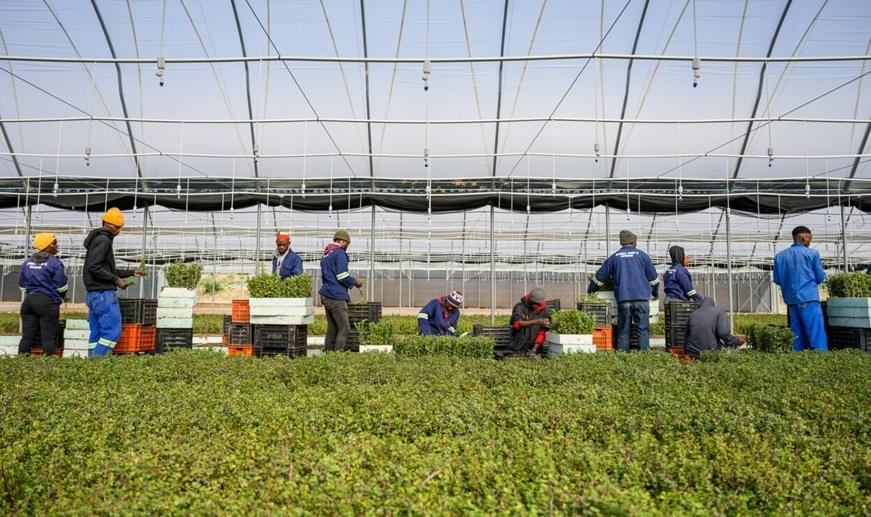
Amazon announced a multi-year agreement to purchase nearly 2 million tonnes of carbon removal credits from a nature restoration project in South Africa, with the company’s investment enabling the expansion of one of the largest carbon removal projects in the world.
Under the project, 180 million spekboom shrubs – known for their ability to absorb carbon, and ecosystem restoration capabilities – will be planted and grown across more than 50,000 hectares of previously degraded land. In addition to the carbon and restoration impact, the project is anticipated to generate significant local social benefits, including the creation of 11,000 jobs, and the injection of more than $500 million into surrounding communities through wages, procurement, landowner payments, and community investment.
According to Amazon, spekboom, a native succulent, has been found to remove carbon from the atmosphere at rates comparable to young tropical forests, in addition to helping to transform the land around it by restoring moisture and improving soil health, creating conditions for natural ecosystem recovery.
Under the new agreement, Amazon has committed to purchase 1.95 million tons of carbon removal credits generated by the project over more than a decade. As a result of the investment, the company said that the project will expand from its current phase of 30 million plant across 10,000 hectares to an additional 50,000 hectares, with 180 million plants to be planted by the end of 2028.
The commitment also enabled the World Bank’s recent launch of a Spekboom Outcome Bond, by giving investors the confidence that there would already be a buyer for the project’s future carbon credits, Amazon added.
Amazon said that the credits will be available for qualified companies to purchase through its carbon credit service. Launched in 2025, and expanded earlier this year, the service enables companies in Amazon’s value chain to access high-quality carbon neutralization and inset credits.
Amazon Chief Sustainability Officer Kara Hurst said:
“This project will restore the ecosystem and create jobs—a model for how nature-based solutions can enable both climate action and economic development.”