Low-carbon cement materials developer NeoCem announced that it has raised €17 million (USD$19 million) in a new funding round from asset management company Crédit Mutuel Impact, with proceeds aimed at scaling the deployment of its low carbon cement technology.
Cement production is a significant contributor to global greenhouse gas emissions, and one of the more difficult sectors to decarbonize. Cement currently accounts for approximately 8% of global carbon dioxide emissions, with over 900 kg of CO2 emissions generated for every 1,000 kg of material produced. Conventional cement contains an average of 77% clinker, which is produced by heating limestone in a process that releases significant amounts of CO2.
Founded in 2021 by Christophe Deboffe and Benjamin Constant, France-based NeoCem produces low-carbon cement binders using recycled clay byproducts. The company said that its technology reduces CO2 emissions by up to 90% compared to traditional clinker or standard cement, while maintaining equivalent technical with no additional cost to the market.
The company’s technology is based on a circular and locally sourced model, recycling clays derived from abundantly available industrial waste and co-products.
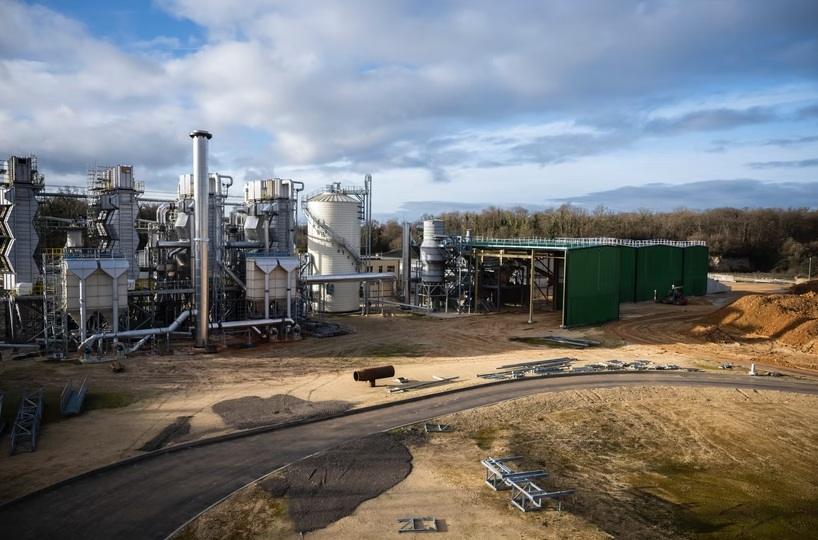
NeoCem said that the new capital will fund the expansion of its existing industrial production site toward a target capacity of 200,000 tons per year and support a large-scale deployment strategy based on industrial partnerships and joint ventures in France and internationally.
The round was led by the Fonds Révolution Environnementale et Solidaire, and Articvle 9 fund managed by Crédit Mutuel Impact.
Nadia Bouzigues, Chief Executive Officer of Crédit Mutuel Impact, said:
“NeoCem has developed a decarbonizing and competitive solution to advance one of the country’s most emitting industrial sectors. The offer is available immediately and is already of interest to big names in construction. With this investment, we are continuing our commitment to the environment and enabling the company to increase both its industrial capabilities and its commercial efficiency.”