
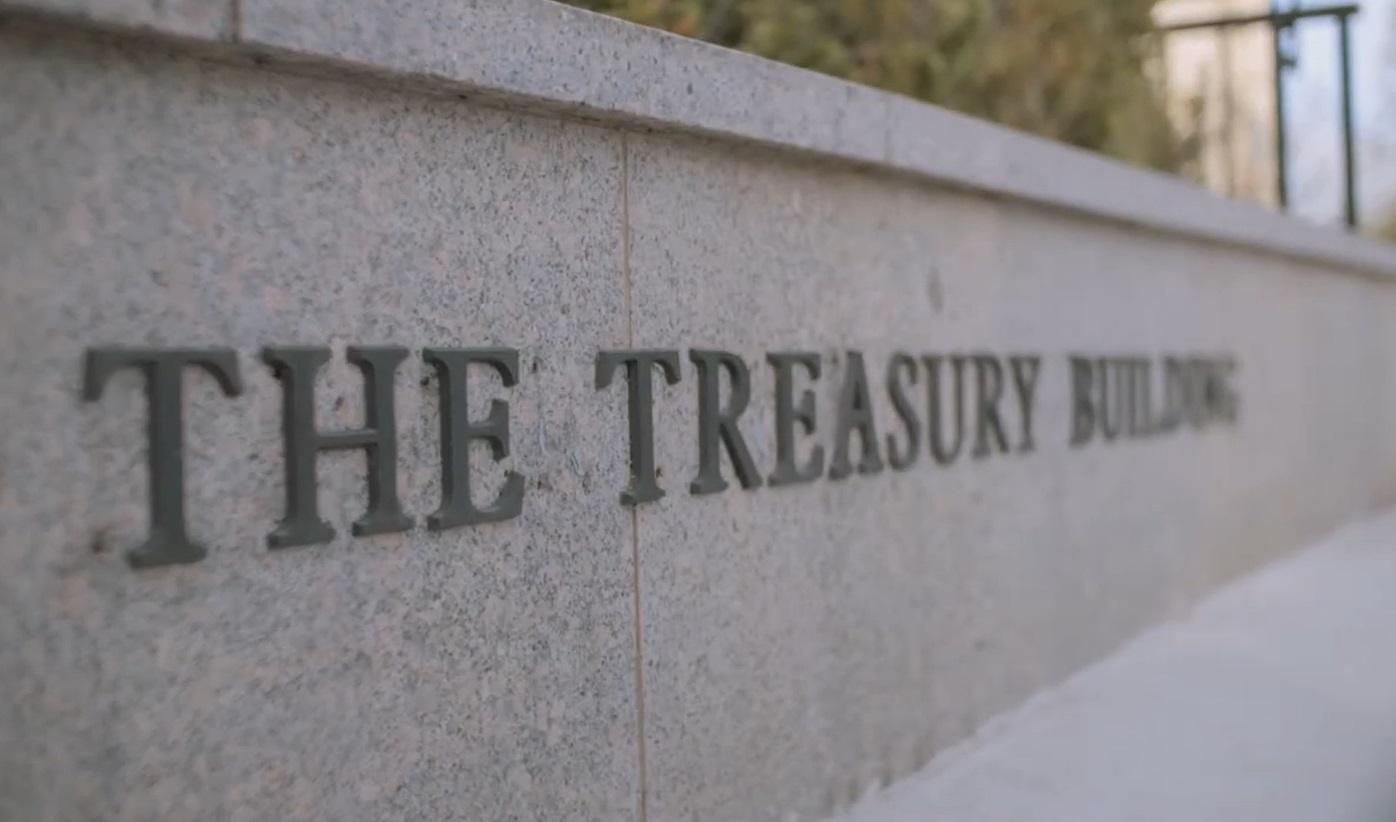
The Government of Australia’s Treasury department announced the launch of a consultation on a series of new proposed “efficiency-enhancing” measures within its sustainability reporting framework aimed at reducing compliance costs for companies required to provide climate-related financial disclosures, and easing the information request burden for businesses, particularly SMEs, in their value chains.
Proposed reforms in the consultation include measures to eliminate or delay the transition from limited to reasonable assurance for climate-related disclosures, and to provide guidance to determine boundaries for determining what information may be sought from value chain companies for Scope 3 reporting.
The proposals come as Australia is in the middle of rolling out its corporate sustainability reporting regime. Australia introduced a new law in 2024, setting out mandatory climate-related reporting requirements for large and medium sized companies, including disclosures on climate-related risks and opportunities, and on greenhouse gas emissions across the value chain.
Reporting requirements apply to all public companies and large proprietary companies required to provide audited annual financial reports that meet specific size thresholds, which started in 2025 with companies with over 500 employees, revenues over $500 million or assets over $1 billion, as well as asset owners with more than $5 billion in assets, apply in 2026 for medium sized companies with 250+ employees, $200 million+ revenue, and $500 million assets, and were initially set to apply to smaller companies with 100+ employees, $50 million+ revenue, and $25 million+ assets in 2027.
Earlier this year, with the release of Australia’s 2026 Budget, the government announced plans to raise the threshold of companies required to publish audited financial and sustainability reports to exempt those with revenues under A$100 million and assets of $50 million. While the threshold change is not part of the new consultation, the government also announced at the time plans to consult on reforms to reduce compliance burdens related to climate-related reporting, including “setting clearer boundaries on supplier information requests, to reduce costs and complexity, particularly for small businesses.”
Australia’s current climate-related reporting regime utilizes an assurance framework that plans a shift from limited assurance to the more rigorous reasonable assurance string from mid-2030. In the new document, the government said that it is “seeking evidence regarding the costs and benefits of the current assurance settings, including their impact on reporting entities, assurance providers and users of sustainability reports.”
Options proposed in the consultation document include maintaining the limited assurance requirement going forward by eliminating the upcoming transition to reasonable assurance, delaying the transition to reasonable assurance to 2035 in order to provide companies, assurance providers and data service providers with more time to develop reporting systems, and requiring reasonable assurance only on more “mature” reporting metrics – such as Scope 1 and 2 emissions, for example – while sticking with limited assurance for less mature metrics – such as Scope 3 emissions.
Under the current system, companies subject to mandatory climate-related reporting requirements are set to begin providing complete Scope 3 disclosures from their second year of reporting, with Scope 3 reporting limited to “reasonable and supportable information… available without undue cost or effort.” While mandatory Scope 3 reporting has yet to begin in Australia, the consultation notes that “reporting practices observed overseas under similar disclosure requirements has highlighted the potential value of clearer boundaries on value-chain information requests.”
Options proposed in the consultation to improve the consistency and predictability of value-chain information requests and reduce the burden of information requests include providing additional guidance on what constitutes a reasonable request for information from a reporting entity’s value chain, which the government said could help companies and SMEs in their value chain to determine the information that may reasonably be sought, and; increasing the availability of publicly accessible domestic emissions factors, in order to provide reliable secondary data to help reduce the need for complex data requests from SMEs.
Additionally, the consultation also includes proposals aimed at providing clearer guidance on key terms and concepts, with proposals including providing resources on applying proportionality mechanisms based on terms included in the standards such as “reasonable and supportable information … without undue cost or effort,” and on applying the statement of “no material climate-related risks or opportunities,” as well as offering more workshops and educational seminars to help companies understand the flexibility mechanisms built into the reporting regime.
The consultation will remain open for feedback through October 2, 2026. Click here to access the consultation.