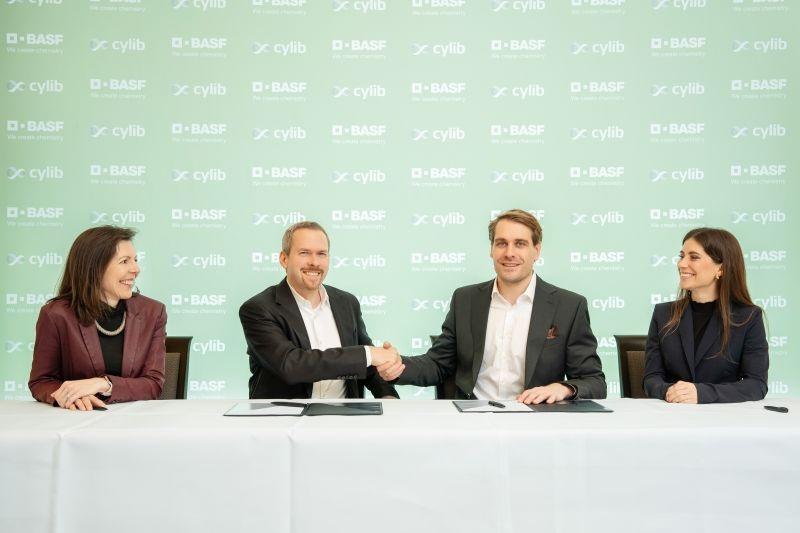
Sustainable battery recycling technology company cylib announced an agreement to acquire chemicals giant BASF’s Battery Recycling business.
Cylib said that the transaction would help it expand its position its position as a key player in European battery recycling, while BASF said that it would enable its Battery Materials business to focus exclusively on Cathode Active Materials (CAM), where its said that it sees the strongest potential for customer value, differentiation, and profitable development.
BASF Board of Executive Directors member Anup Kothari said:
“BASF Battery Materials operates in an attractive long-term growth market that is also characterized by significant market and technology risks. This next step in the strategic development of the business reflects the ‘Winning Ways’ strategic ambition: Enabling standalone businesses like BASF Battery Materials to compete successfully in their specific markets and maximize their value.”
Founded in 2022, Germany-based cylib is a spinout of RWTH Aachen University, developing end-to-end battery recycling solutions. The company’s proprietary technology enables the recovery of critical raw materials, including lithium, graphite, nickel, cobalt and manganese, from end-of-life batteries, black mass and battery production scrap, utilizing a water-based process for lithium and graphite recovery that reduces chemical consumption.
The acquisition covers the business’s operations in Europe and North America, including intellectual property, customer contracts and partner relationships, as well as the black mass production plant and battery recycling prototype plant in Schwarzheide, Germany. Cylib noted that the transaction will also provide it with access to the North American market and significant customer relationships in the U.S.
Dr. Gideon Schwich, Co-CEO and Co-Founder of cylib, said:
“BASF’s battery recycling teams bring many years of experience and extensive know-how. Together with them, we will continue to expand our technology and our value chain from end-of-life battery to raw material. This will enable us to recover critical battery raw materials and strengthen Europe’s security of supply.”
The transaction is expected to close between Q2 and Q3 2027, subject to regulatory approvals and customary closing conditions.