
• HASI and KKR commit an additional $1 billion to CarbonCount Holdings 1, lifting total investment capacity toward $5 billion with leverage.
• Capital targets long-dated US clean energy and sustainable infrastructure assets as power demand and grid investment accelerate.
• Structure reflects growing institutional demand for flexible, long-term financing aligned with energy transition and infrastructure resilience.
HA Sustainable Infrastructure Capital and KKR are deepening one of the US market’s largest dedicated co-investment platforms for clean infrastructure, committing an additional $1 billion to CarbonCount Holdings 1 as capital demand accelerates across the energy system.
The two firms have agreed to invest a further $500 million each into CCH1, the co-investment vehicle they established to deploy long-term capital into sustainable infrastructure projects across the United States. The expanded commitments, combined with existing leverage targets, are expected to bring the vehicle’s total investment capacity to nearly $5 billion.
The investment period has also been extended, running through the earlier of the end of 2027 or the point at which all commitments are fully deployed, giving the platform a longer runway to source and execute transactions amid a fast-evolving power and infrastructure landscape.
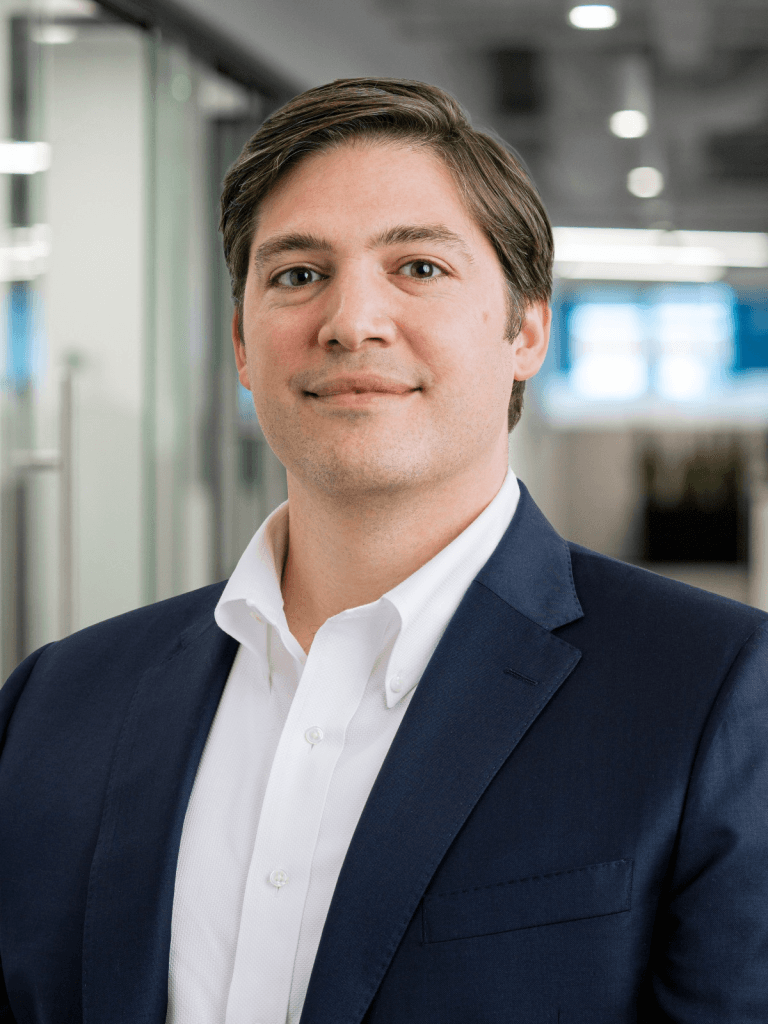
“CCH1 enables us to efficiently deploy capital into sustainable infrastructure projects that support the energy transition and address the country’s rising power demand,” said Marc Pangburn, Chief Revenue and Strategy Officer at HASI. “Alongside KKR, we are pleased to further scale CCH1 to deliver long-term value for our clients and stakeholders.”
Institutional Capital Meets Rising Power Demand
The additional capital arrives at a moment of structural change in US electricity markets. Data center growth, industrial electrification, grid modernization, and clean energy buildout are driving sustained demand for patient, long-duration capital. Traditional project finance alone has struggled to meet the scale and tenor required, opening space for balance-sheet driven platforms backed by institutional investors.
For KKR, the expanded commitment reinforces a strategy that blends infrastructure, energy transition, and credit capabilities to provide flexible capital solutions at scale.
“Expanding our commitment to CCH1 reflects the strong momentum we are seeing across the strategic partnership and our conviction in the opportunity set ahead,” said Cecilio Velasco, Managing Director at KKR. “Together with HASI, we look forward to delivering long-term, flexible capital to high-quality sustainable infrastructure projects across the U.S.”

The structure of CCH1 allows both firms to move beyond single-asset financing toward portfolio-level deployment, offering speed and certainty to developers and asset owners navigating permitting, supply chain constraints, and evolving regulatory requirements.
RELATED ARTICLE: KKR to launch its two first ESG credit funds
Strategy, Structure, And Track Record
CCH1 was established in May 2024, with HASI and KKR each committing an initial $1 billion to a strategic partnership designed to co-invest in US clean energy assets over an 18-month period. The vehicle was structured to support a broad range of sustainable infrastructure, rather than a single technology or subsector, reflecting the diversity of capital needs emerging across the transition.
In June 2025, CCH1 expanded its investment capacity through the issuance of $592 million in 20-year fixed-rate senior unsecured notes. That transaction extended the initial investment period through November 2026 and reinforced the platform’s focus on long-dated, predictable cash flows that align with institutional liability profiles.
Through November 2025, and after accounting for reinvestment of returned capital, the HASI-KKR partnership had closed nearly $3 billion in investment commitments spanning six asset classes. While specific assets were not disclosed, the breadth of deployment highlights the platform’s role as a flexible capital provider rather than a narrow thematic fund.
What Executives And Investors Should Watch
For C-suite leaders, the expansion of CCH1 signals a maturing phase of the US energy transition, where scale, balance-sheet strength, and financing creativity increasingly matter as much as technology choice. Large corporates, utilities, and developers are likely to encounter more opportunities to partner with institutional platforms that can write sizeable checks and hold assets over decades.
For investors, the deal underscores continued appetite for infrastructure strategies that combine climate alignment with durable cash flows, particularly in a higher-rate environment where long-term fixed-rate structures remain attractive. It also reflects confidence that US policy support, from grid investment to clean energy incentives, will continue to underpin deal flow.
At a system level, the enlarged CCH1 platform illustrates how private capital is stepping in to bridge the gap between public policy ambitions and on-the-ground project delivery. As US power demand rises and decarbonization timelines tighten, the ability to mobilize multi-billion-dollar pools of capital may prove as critical as the technologies they finance.
Follow ESG News on LinkedIn
The post KKR, HASI Add $1 Billion To Scale US Sustainable Infrastructure Platform appeared first on ESG News.