
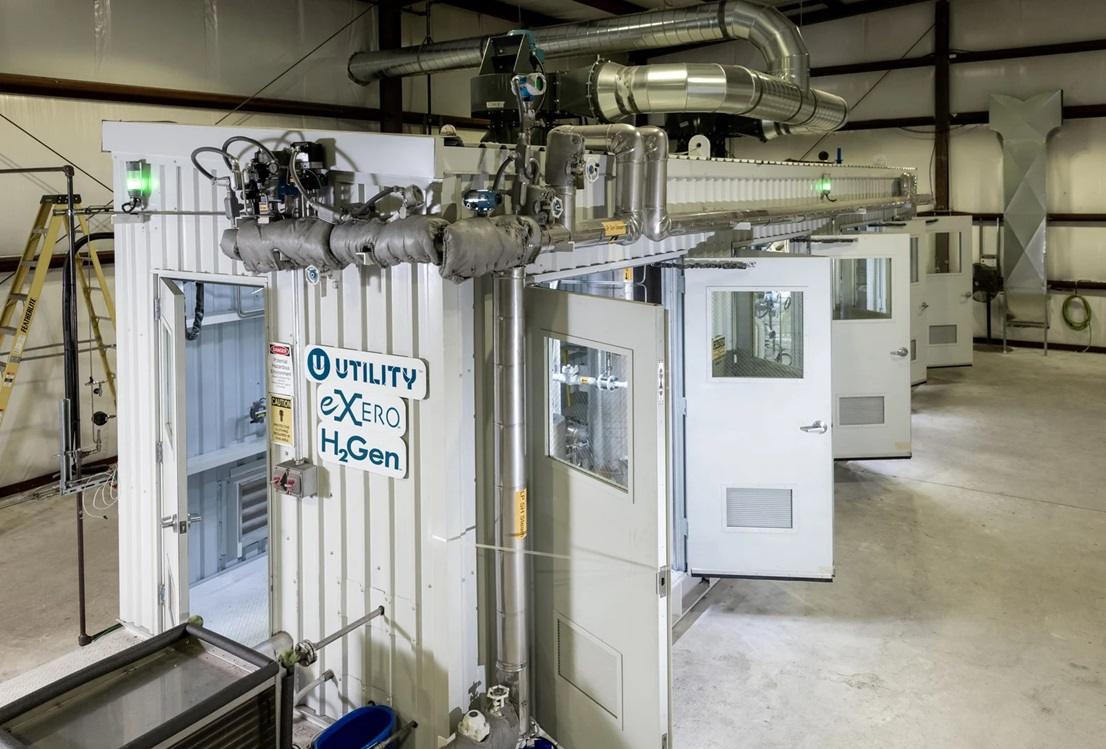
Cleantech company Utility Global announced that it has raised $100 million in a Series D funding round, with proceeds aimed at scaling its hydrogen technology-based platform to decarbonize hard-to-abate industries.
Founded in 2018, Houston, Texas-based Utility Global provides solutions aimed at decarbonizing sectors such as steel, mobility, refining, chemicals, and upstream oil & gas with cleaner and more efficient alternatives to carbon- and energy-intensive technologies.
The company said that the new capital will enable it to globally deploy its proprietary “H2Gen” technology at industrial scale. H2Gen converts water into clean hydrogen and a high-purity CO2 stream without electricity by utilizing industrial off-gases. The technology is designed to integrate directly into existing industrial infrastructure in hard-to-abate assets, supporting decarbonization. The technology also produces a high-concentration CO2 stream, significantly reducing the cost and complexity of carbon capture.
Parker Meeks, Chief Executive Officer and President of Utility Global, said:
“Industrial customers are no longer looking for pilots or promises; they need deployable solutions that work within existing assets and deliver true economic industrial decarbonization today that is operationally reliable and highly scalable. Utility’s technology produces both economic clean hydrogen and capture-ready CO₂ streams, and this capital enables us to scale and deploy that impact globally with speed, discipline, and rigor.”
The new financing round was led by Ara Partners was led by APG Asset Management. Ara Partners first invested in Utility Global in 2021, and also participated in the company’s $53 million Series C round in 2024.
Cory Steffek, Partner at Ara Partners and Utility Global board chair, said:
“Utility is tackling one of the most difficult challenges in the energy transition: decarbonizing hard‑to‑abate industrial sectors. What sets Utility apart is its ability to compete head‑to‑head with conventional fossil‑based solutions on cost and reliability, even as it materially reduces emissions.”