• First beverage company to achieve 100% certification of all sites to the Alliance for Water Stewardship standard
• 70 watershed projects now regenerating 14.1 million m³ of water annually, targeting net-positive water impact
• Multi-million euro investments in France and Italy align corporate water strategy with biodiversity, agriculture, and regional resilience
Nestlé Waters & Premium Beverages has secured full certification of all 39 of its bottling sites under the Alliance for Water Stewardship standard, becoming the first food and beverage company to achieve global coverage across its operations. The announcement, timed ahead of World Water Day on 22 March, places water governance at the center of corporate risk management as climate volatility tightens pressure on freshwater systems worldwide.
Two facilities, in Buxton in the United Kingdom and Tunuyán in Argentina, achieved Platinum status, the highest level within the AWS framework. The certification spans operations across Europe, the Middle East, Africa, South America and Asia, reflecting a multi-regional approach to water stewardship that aligns with tightening regulatory scrutiny and investor expectations around natural capital.
From Compliance to Watershed-Level Strategy
The AWS standard, widely regarded as the only globally recognized independent framework for water stewardship, shifts corporate responsibility beyond operational efficiency toward collective basin-level outcomes. For Nestlé Waters, this means embedding water management into governance structures that account for shared risks across communities, ecosystems and supply chains.
As water stress intensifies across key production regions, the company’s approach emphasizes local engagement rather than centralized offsets. This aligns with emerging regulatory trends, particularly in Europe, where disclosure frameworks increasingly require companies to demonstrate place-based environmental impact and resilience planning.
Muriel Lienau, CEO of Nestlé Waters & Premium Beverages, said, “We are pleased to share these significant milestones today on AWS certification and water regeneration. Good water stewardship is part of our DNA and strong water resilience is a strategic imperative for our business – that’s why we look to collaborate everywhere we operate to ensure we address any shared water challenges, now and for the future. This is something we’ve been working on for decades.”
She added, “We remain committed to protect, restore and return water where we operate. Water resilience has a growing awareness on the international agenda and we know no one can achieve this on their own. By partnering with experts, local organisations and communities we know that collaboration at catchment level is the key for meaningful impact.”

Scaling Water Regeneration as a Measurable Asset
Alongside certification, the company reported 70 active water regeneration projects delivering 14.1 million cubic meters of water annually. These initiatives are measured using the World Resources Institute’s Volumetric Water Benefit Accounting methodology, providing a standardized basis for quantifying impact and aligning corporate disclosures with investor-grade metrics.
The projects are designed to mature over time, with the stated goal of returning more water to local systems than the company consumes in its operations. This net-positive ambition reflects a broader shift in ESG strategy, where companies are increasingly expected to move beyond mitigation toward restoration and regeneration.
Crucially, the projects are implemented with local stakeholders, including municipalities, farmers and conservation groups, reinforcing the link between corporate water use and regional socio-economic stability.
RELATED ARTICLE: Nestlé Waters France to use the first hydrogen-powered freight train
Capital Deployment Targets Strategic Watersheds
Nestlé Waters is backing its strategy with targeted capital investments in key European markets. In France, the €25 million Agrivair Garrigue program focuses on sustainable agriculture, biodiversity restoration and water quality improvements in the Gard region, home to the Perrier and Maison Perrier brands.
In Italy, the company is expanding its F.O.N.T.E initiative with an additional €40 million investment through 2030, building on a prior €30 million program. The initiative supports water basin protection, biodiversity conservation and community resilience across catchments linked to brands such as S.Pellegrino, Acqua Panna and Levissima.
These investments reflect a convergence of environmental and financial priorities, where water security is increasingly treated as a material business risk with direct implications for asset continuity, brand value and regulatory compliance.
Partnerships Extend Governance and Scientific Oversight
The company also confirmed the extension of its partnership with the International Union for Conservation of Nature, which provides science-based guidance and aligns projects with the IUCN Global Standard for Nature-based Solutions.
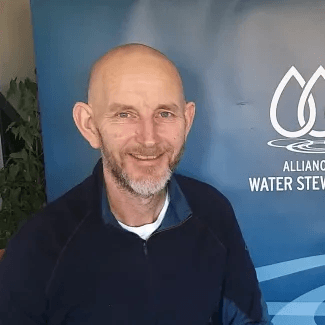
Adrian Sym, Chief Executive of the Alliance for Water Stewardship, said, “In an era of increasing resource volatility, where individuals and organisations are passionate about making a difference but don’t always know how, a global independent standard that includes an accessible, independent and practical framework for water stewardship and landscape protection is essential.“
“Nestlé Waters & Premium Beverages’ approach to collaborative, localised, context-based solutions, tailored to each bottling site is exemplary. It’s fantastic to see a large global company approaching this bottom-up all over the world, rather than top-down or by taking a mass rebalance approach to offset water usage. In fact, NW&PB has provided invaluable learnings for driving scaled impact and is an important ally in helping us deliver on our mission to ignite and nurture water stewardship globally.”
What This Means for Executives and Investors
For C-suite leaders and investors, the milestone reflects a broader recalibration of ESG priorities. Water risk is moving rapidly up the corporate agenda, driven by regulatory pressure, supply chain exposure and the physical impacts of climate change.
Nestlé Waters’ approach offers a template for integrating governance, finance and environmental outcomes into a unified strategy. By linking certification, capital deployment and measurable regeneration, the company positions water stewardship not as compliance, but as a driver of long-term resilience.
As global frameworks evolve toward mandatory nature-related disclosures, initiatives that demonstrate verifiable, local impact are likely to define competitive advantage. In this context, water stewardship is no longer a peripheral sustainability issue, but a central pillar of business continuity in an increasingly resource-constrained world.
Follow ESG News on LinkedIn
The post Nestlé Waters Becomes First Beverage Company to Certify 100% of Sites to AWS Standard appeared first on ESG News.