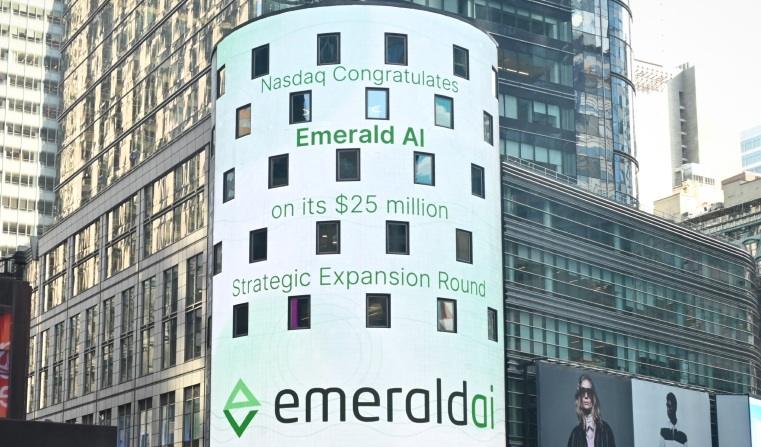
Energy tech startup Emerald AI announced that it has raised $25 million in a strategic expansion round, with proceeds from the financing aimed at scaling the company’s solutions to enable data centers to align energy use with grid capacity.
The funding round was led by Energy Impact Partners (EIP), and included participation from Amplo, Eaton, GE Vernova, IQT, Lowercarbon Capital, NVIDIA’s venture arm NVentures, Radical Ventures, Salesforce Ventures, Samsung Ventures, and Siemens, among others.
According to Emerald AI, the financing round comes as the rapid growth in energy-hungry AI infrastructure presents electricity grids with a “power crunch” challenge, with the AI industry seeking to bring nearly 50GW of data centers online in the U.S. over just the next three years.
Launched in 2024, Emerald AI is developing software to help address this challenge by enabling data centers to act as flexible grid resources, aligning energy use with grid capacity, including reducing power consumption during periods of grid strain. The company’s Emerald AI Conductor platform enables AI data centers to flexibly adjust their power consumption from the electricity grid on demand, orchestrating the computing loads of inference, training, and fine-tuning AI models across a network of data centers to bolster the power grid’s reliability while meeting strict compute performance standards.
Alongside the financing round, Emerald AI also announced the formation of a new strategic advisory board, including existing investors NVIDIA, Salesforce Ventures, and National Grid, as well as new strategic partners that have invested in the company such as Eaton, GE Vernova, IQT, Samsung Ventures and Siemens.
Emerald AI founder and CEO Dr. Varun Sivaram said:
“We are building a future where breakneck AI innovation doesn’t break the grid—it helps strengthen it. With this new capital, the backing of our Strategic Advisory Board, and a growing ecosystem of partners across AI, energy, and infrastructure, we have the resources we need to unlock the energy bottleneck and power the next era of human progress.”