
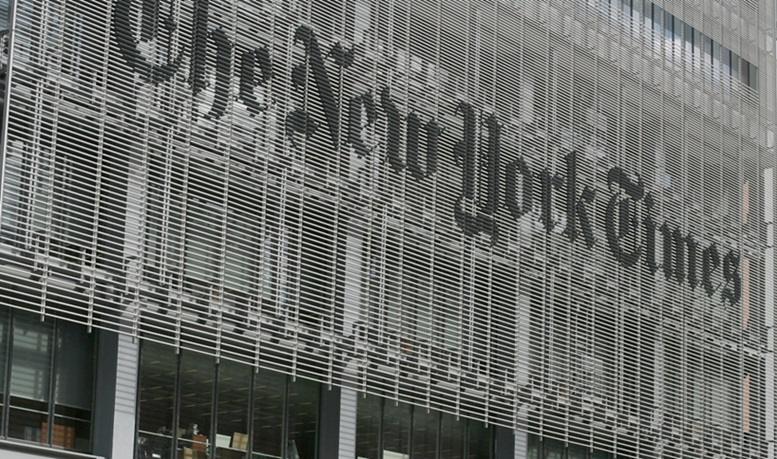
U.S. federal agency The Equal Employment Opportunity Commission (EEOC) announced that it has filed a lawsuit in a federal court against the New York Times, alleging that the company violated laws prohibiting race- and sex-based discrimination by passing over a white male employee for a promotion due to its Diversity, Equity, and Inclusion (DEI) policies.
In a statement provided to ESG Today, a New York Times spokesperson said that the company “categorically rejects the politically motivated allegations brought by the Trump administration’s EEOC,” adding:
“Our employment practices are merit-based and focused on recruiting and promoting the best talent in the world. We will defend ourselves vigorously.”
The new lawsuit marks the latest in a series of actions by the Trump administration targeting programs and firms following policies related to DEI, starting with an Executive Order signed by Trump after taking office eliminating DEI preferencing in federal contracting, and requiring contractors to affirm that they “will not engage in illegal discrimination, including illegal DEI.” Earlier this year, the EEOC announced that it has launched an investigation into Nike, also based on allegations that the company discriminated against white workers through its DEI programs.
In its new lawsuit, the EEOC argues that The New York Times chose not to promote a white male employee for a Deputy Real Estate Editor position in early 2025, despite being well-qualified for the position, with the publisher ultimately hiring a non-white female external candidate for the role, described by the agency as having “little to no experience in real estate journalism.” The EEOC said that every candidate that advanced through to the final interview process was not a white male.
In a press release announcing the lawsuit, the EEOC noted that the New York Times’ hiring decision was made in accordance with its DEI goals, noting that the company has “a well-documented commitment to enacting race and sex conscious decision making in the workforce through its diversity, equity, and inclusion (DEI) policies,” and that on several occasions it “stated goals and action plans to increase non-white and female representation in its leadership positions.”
EEOC Chair Andrea Lucas said:
“No one is above the law — including “elite” institutions. There is no such thing as “reverse discrimination”; all race or sex discrimination is equally unlawful, according to long-established civil rights principles… Federal law is clear: making hiring or promotion decisions motivated in whole or in part by race or sex violates federal law. There is no diversity exception to this rule.”
The EEOC said that the New York Times’ alleged actions violate Title VII of the Civil Rights Act of 1964, which prohibits discrimination on the basis of race or sex, and that it filed the suit after first attempting to reach a pre-litigation settlement with the company.
In the company’s statement, the New York Times spokesperson defended the hire, saying that “neither race nor gender played a role in this decision – we hired the most qualified candidate, and she is an excellent editor.”
The spokesperson added:
“The New York Times’s commitment to diversity in all its forms is longstanding and unwavering, as is our commitment to a fair and legal hiring process that does not discriminate against anyone.”
Photo by David Shankbone / Wikimedia Commons / CC BY-SA 3.0