Private markets-focused sustainability data solutions provider Novata today announced the launch of Risk Atlas, a new AI-powered tool designed to help investors and companies identify, prioritize and monitor emerging risks across portfolios and supply chains.
New York-based Novata was founded in 2021 by S&P Global, the Ford Foundation, asset management firm Hamilton Lane, and social change-focused investment firm Omidyar Network. Developed in collaboration with general partners (GPs) and limited partners (LPs), the platform was designed to provide private markets investors with a solution for ESG measurement, data collection and benchmarking, and enable reporting on sustainability data.
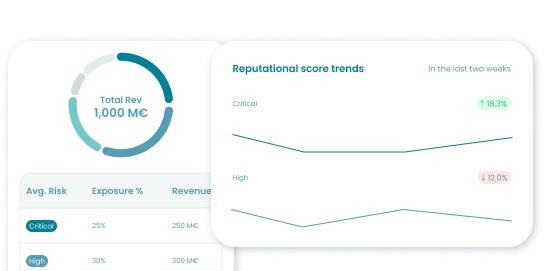
According to the company, the new solution measures risk across five key categories – including reputational, cyber, geopolitical, physical climate, and transition risk – using AI-enabled intelligence from specialized service providers to continuously surface, structure, and refresh risk signals.
Key features and capabilities of the new solution highlighted by Novata include enabling organizations to identify where risk is concentrated or emerging across multiple categories, compare risk across companies, sectors, and categories and understand how multiple risks contribute to an entity’s overall exposure profile, and to prioritize monitoring and engagement based on material exposure.
The company said that the platform is designed to support the full investment lifecycle, from pre-investment screening to ongoing portfolio oversight, providing the ability to flag high-risk exposures before capital deployment, track risk developments through automated updates, monitor portfolio exposure at scale, and customize risk thresholds and weightings based on strategy.
Christina Anslem, Advisory Manager at Novata said:
“We built Risk Atlas to help organizations move beyond fragmented risk signals. By standardizing risk across portfolios and supply chains, the platform helps teams identify where exposure is most critical, scale monitoring more efficiently, and focus resources where action is needed most.”