
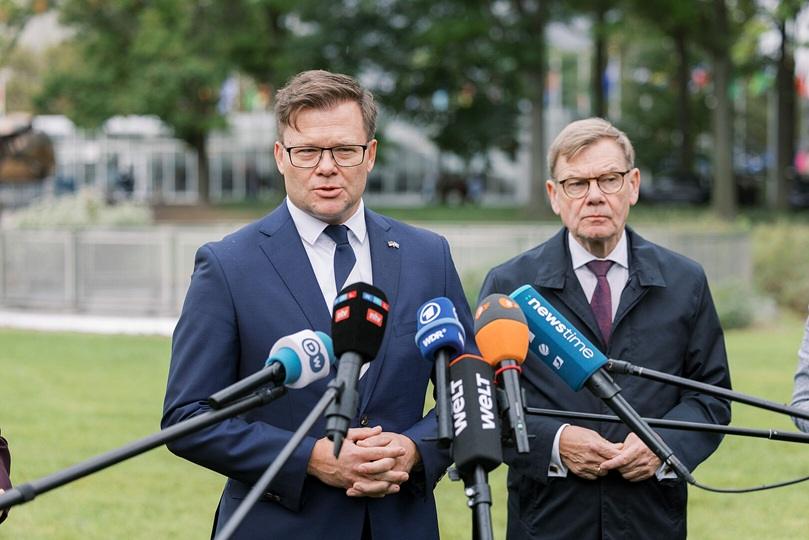
The government of Germany announced the release of its “Roadmap for Transitioning Away from Fossil Fuels,” setting out the country’s strategy to end the use of coal, oil and natural gas by 2045 at the latest.
With the release, Germany becomes the third country to launch a roadmap to end the use of fossil fuels, joining France and the Netherlands.
The new roadmap, presented by Germany’s Federal Environment Minister Carsten Schneider, was released in the wake of the COP30 conference in November 2025, in which the EU and several other countries unsuccessfully pushed to include a reference to a roadmap away from fossil fuels in the final agreement. At the conclusion of COP30, the Brazil presidency committed to create science-based roadmaps over the next year on the transition away from fossil fuels and on halting deforestation, although these would be voluntary, and sit outside of the UN system.
In a statement announcing the release of the plan, Schneider emphasized that the shift away from fossil fuels represents “not only a climate strategy, but also an economic policy strategy,” particularly in light of recent events highlighting the need to reduce dependence on imported energy sources.
Schneider said:
“More and more countries are realising just how costly and dangerous their dependence on fossil fuels is. When the situation in the Strait of Hormuz determines whether people can still afford their daily commute to work, something is seriously wrong. We need to break our dependence on fossil fuels – and we can.”
Fossil fuels continue to account for nearly two thirds of Germany’s energy consumption, with petroleum making up 36%, natural gas 24%, and coal 5% in 2024, with the vast majority of petroleum and natural gas imported.
The new roadmap focuses on increasing the use of renewable energy to generate electricity and on the electrification of transport, heating and industrial processes in Germany.
Key aspects of the plan include increasing the share of renewable energy in electricity generation from 55% to 80% by 2030, phasing out coal by 2038, expanding electricity grids, and switching gas-fired power stations will switch to green hydrogen, as well as supporting the accessibility of electric mobility to more consumers and expanding charging points, and expanding the use of heat pumps and district heating to replace oil- and gas-fired heating systems. On the industrial front, the government said that it is pursuing a strategy of electrification and modernization, including decarbonization-focused funding programs, alongside the EU’s Emissions Trading System (ETS) and Carbon Border Adjustment Mechanism (CBAM).
The government added that with the release of the plan it is “seeking to galvanise the process and prompt as many other nations as possible to finalise their own plans.”
Schneider said:
“We hope to set an example internationally with our roadmap. I am confident that many other countries will follow suit.”
Image source: BMUKN / Johnny Vacar