- European Commission proposes €200 million ($217 million) guarantee for private investment in innovative nuclear technologies funded through the EU carbon market
- Nuclear power’s share of EU electricity has fallen from about one-third in 1990 to roughly 15% today, increasing reliance on imported fossil fuels
- Debate intensifies across Europe as governments balance energy security, industrial competitiveness, and climate targets
Europe’s retreat from nuclear energy over the past three decades was a “strategic mistake,” European Commission President Ursula von der Leyen said Tuesday, arguing that the shift has left the region vulnerable to volatile fossil fuel markets at a time of rising geopolitical tension.
Speaking at an energy event in Paris, von der Leyen said the European Union’s declining nuclear fleet has increased reliance on imported oil and gas, exposing member states to price shocks and supply disruptions. The warning comes as global energy markets react to instability linked to the war involving Iran, adding fresh urgency to Europe’s long-running debate over energy security.
Europe produced roughly one-third of its electricity from nuclear power in 1990. Today that figure has fallen to about 15%, according to the Commission.
“This reduction in the share of nuclear was a choice. I believe that it was a strategic mistake for Europe to turn its back on a reliable, affordable source of low-emissions power,” von der Leyen said.
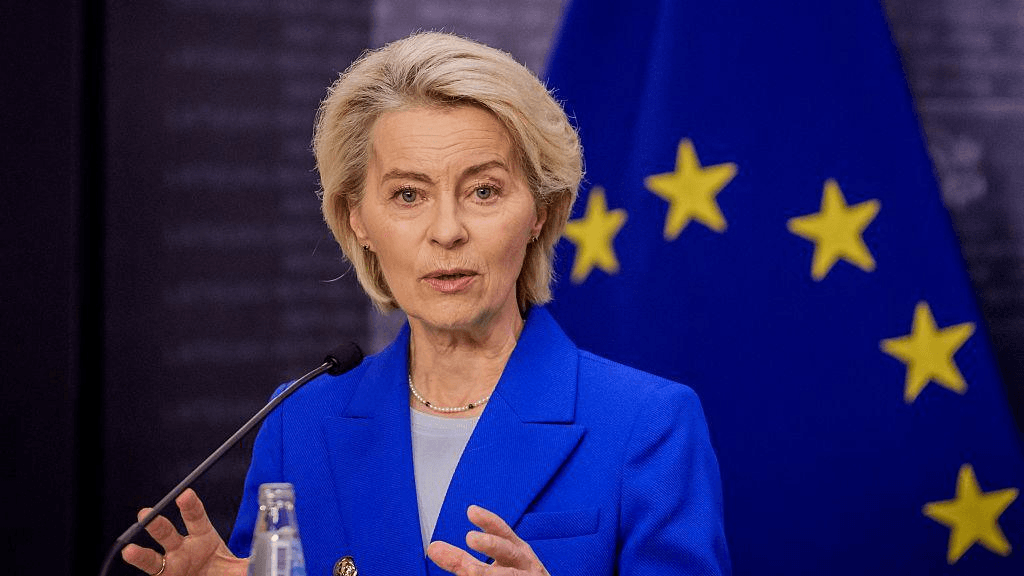
She added that being “completely dependent on expensive and volatile imports” of fossil fuels puts Europe at a competitive disadvantage compared with other regions that maintain larger domestic energy supplies.
Renewables Expansion Meets Industrial Power Demand
The European Union has significantly expanded renewable power generation over the past decade, particularly wind and solar. However, fossil fuels still dominate large parts of the broader energy system, including transportation and heating, while gas plants remain a key component of electricity generation.
That structural dependence became evident in 2022 when Russia curtailed natural gas deliveries following its invasion of Ukraine. Energy prices surged across Europe, forcing governments to subsidize households and industry while accelerating efforts to diversify supply.
The nuclear debate now sits at the intersection of climate policy and industrial competitiveness. Large industrial sectors such as steel, chemicals, and advanced manufacturing require stable baseload power that intermittent renewables cannot always provide without large scale storage or backup generation.
Some governments increasingly see nuclear power as one pathway to deliver firm, low-carbon electricity while supporting decarbonization goals.
Policy Divisions Across EU Member States
Nuclear policy remains politically contentious across the European Union. Germany shut down its final nuclear reactors in 2023, completing a phase-out that began after the Fukushima disaster in 2011 under then Chancellor Angela Merkel. Von der Leyen served as a minister in that government during the decision.
Berlin pushed back strongly on the Commission chief’s comments.
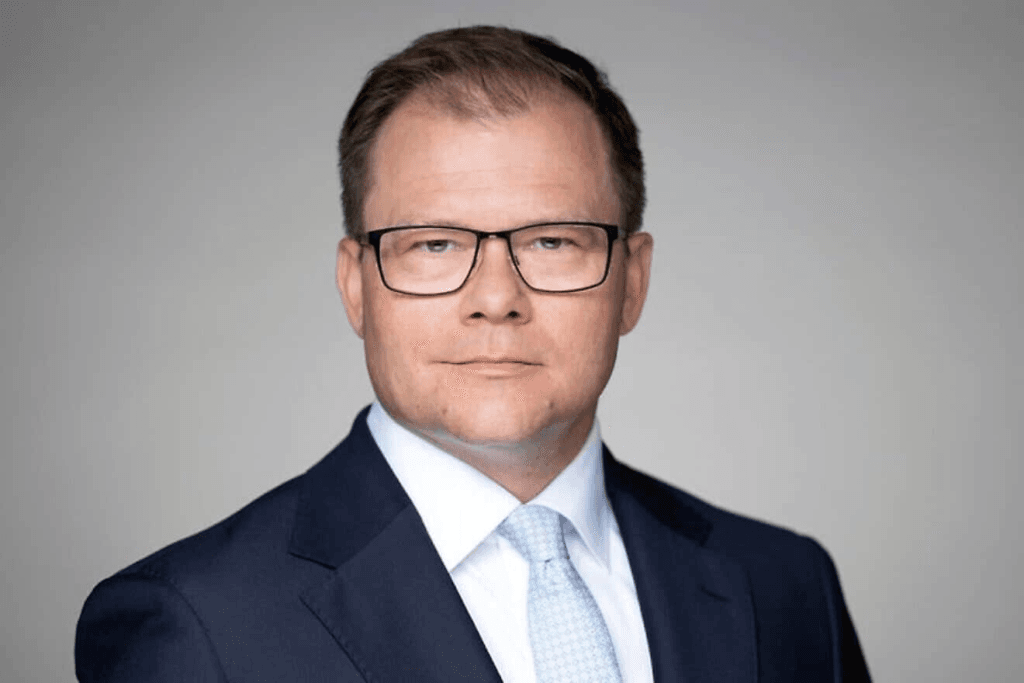
“Cleaner, safer electricity from wind and sun is cheaper, has long been driving the energy transition, and produces no radioactive waste,” Germany’s Environment Minister Carsten Schneider said in a statement Tuesday.
Several other member states continue to oppose nuclear power outright, including Austria and Luxembourg.
Yet political attitudes are evolving in parts of Europe as governments seek reliable sources of low-carbon power. Denmark and the Netherlands, historically skeptical of nuclear energy, have softened their positions as policymakers evaluate future electricity demand tied to electrification and industrial decarbonization.
EU Financing Signals Growing Acceptance
The European Union’s central budget does not directly fund nuclear projects because member states remain divided over the technology. Even so, the European Commission is moving to facilitate private capital flows into next-generation nuclear systems.
Von der Leyen said the Commission plans to offer a €200 million ($217 million) guarantee for private investments in innovative nuclear technologies. The funding would come from revenues generated by the EU’s carbon market.
For investors and utilities, the move represents a modest but symbolically important shift toward integrating nuclear power within Europe’s broader decarbonization framework.
RELATED ARTICLE: EU Proposes Industrial Accelerator Act To Boost Low Carbon Manufacturing
Supply Chains and Strategic Competition
France, which operates the largest nuclear fleet in Europe, continues to champion the technology as central to the continent’s energy strategy.
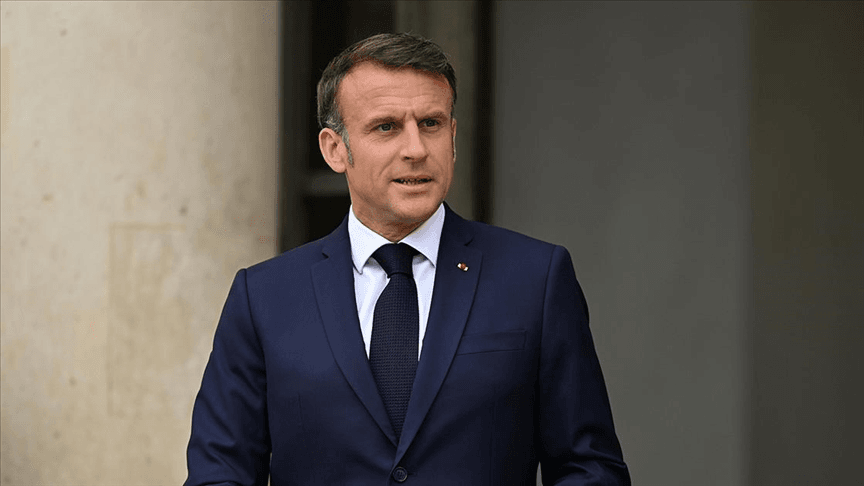
French President Emmanuel Macron told the Paris event that Europe must reduce its dependence on Russian nuclear fuel supply chains.
“We need to cooperate internationally to make progress on this issue, to diversify our supply sources,” Macron said.
Europe’s nuclear operators imported roughly 15% of their uranium from Russia in 2024. France itself sourced 39% of its enriched uranium from Russia in 2025, according to customs data.
Macron also called for standardized reactor designs across Europe, a move that could streamline regulatory approvals and reduce project costs. Such a shift could benefit France’s state-owned nuclear developer EDF, which has faced increasing competition from global rivals.
Last year, South Korea’s Korea Hydro & Nuclear Power won a tender valued at at least $18 billion to build a new nuclear plant in the Czech Republic, beating EDF in a high-profile project that the French group attempted to challenge in court.
Strategic Choices for Europe’s Energy Future
For European policymakers and investors, the renewed nuclear debate reflects a broader strategic question. The continent must simultaneously reduce carbon emissions, secure stable electricity supplies, and limit exposure to geopolitical energy shocks.
Whether nuclear power plays a larger role in that transition will depend on political alignment among EU member states, financing frameworks, and the success of emerging reactor technologies.
For now, the Commission’s position is clear. Europe’s energy strategy can no longer ignore nuclear power as it navigates an increasingly volatile global energy landscape.
Follow ESG News on LinkedIn
The post EU Chief Calls Europe’s Nuclear Phase-Down A Strategic Mistake appeared first on ESG News.