Nature-based solutions company Living Carbon announced today that it has signed a new set of carbon removal offtake agreements with Google, Meta and McKinsey, with the companies contracting over 130,000 tonnes of carbon removal sourced from U.S.-based reforestation projects.
The agreements were made through the Symbiosis Coalition, an advance market commitment (AMC) collaboration launched in 2024 by Google, Meta, Microsoft, and Salesforce, with a collective commitment to contract up to 20 million tons of carbon removal credits by 2030, to send a strong demand signa to help enable the development of high-impact, and science-based restoration projects that will advance progress on global climate goals.
Founded in 2019, California-based Living Carbon transforms marginal land into high-value environmental assets, focusing on restoring abandoned mines, degraded farmland, and unproductive soils through site-tailored reforestation. In addition to removing carbon and generating income through carbon credits, the company’s projects deliver co-benefits including improved soil and water health, enhanced biodiversity, and economic development opportunities for rural communities.
Maddie Hall, CEO and Founder of Living Carbon said:
“We are proud to partner with the Symbiosis Coalition, along with its members, Google, McKinsey, and Meta, to accelerate long-term carbon removal. Multi-year agreements like this provide the confidence needed to invest and scale high-quality, durable removals. This is why Living Carbon exists: we’re intentionally working to turn post-mining and degraded lands in the U.S. from environmental liabilities into productive carbon sinks that not only remove emissions but deliver significant and measurable environmental and social co-benefits as well.”
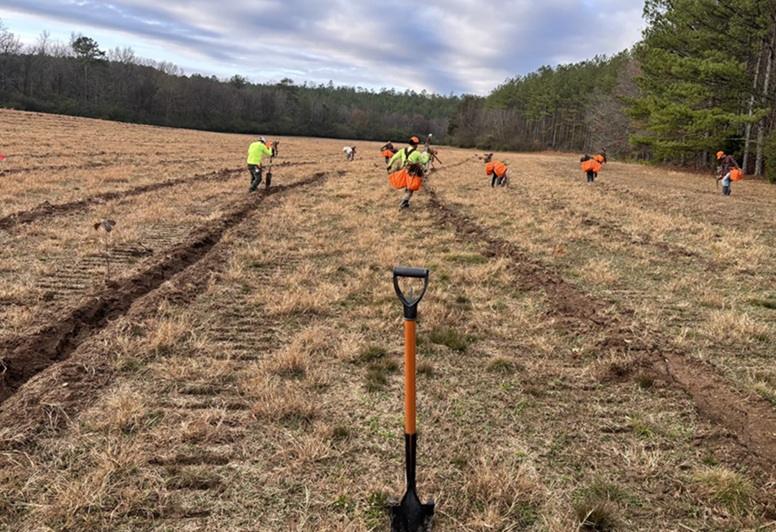
Under the agreements, the companies have contracted 131,240 tons of carbon dioxide removal from Living Carbon over a 10-year period, supporting large-scale reforestation on degraded lands in the Appalachian region of the U.S. The transaction marks the second project announced under Symbiosis’ first joint request for proposals, focused on reforestation and agroforestry projects expected to deliver more than 500,000 tons of carbon removal over 10 years.
Projects selected through the Symbiosis RFP process undergo extensive evaluation, including on-the-ground field diligence, geospatial analysis, third-party technical review, and comprehensive risk assessment. Project selection is guided by five key quality pillars, including conservative accounting, durability, social and community benefits, ecological integrity, and transparency, according to the companies.
The Symbiosis members said that in addition to carbon removal, the project is expected to deliver environmental co-benefits including improved soil and water health and enhanced biodiversity. The reintroduction of native tree species is aimed at restoring habitats for local plant and wildlife species, while also supporting new economic development opportunities in local communities.
Julia Strong, Executive Director of the Symbiosis Coalition said:
“Our support of Living Carbon reflects our belief that effective nature-based carbon removal requires both strong science and solid execution. Their project stands out for its rigor and for its thoughtful and scalable approach shaped around the needs of local communities, ecosystems, and economies in Appalachia.”