
- EU spent an additional €24 billion ($26 billion) on energy imports amid geopolitical tensions, without increased supply
- Commission targets €660 billion ($711 billion) annual investment to drive energy transition through 2030
- AccelerateEU combines emergency consumer relief with structural reforms to reduce fossil fuel dependence
The European Commission has unveiled AccelerateEU, a policy package designed to protect households and industry from volatile fossil fuel markets while fast-tracking the shift to domestic clean energy.
The move comes as geopolitical tensions in the Middle East push energy prices higher. Europe has already absorbed €24 billion in additional import costs without receiving more supply. The financial hit reinforces long-standing concerns about reliance on external fossil fuel sources.
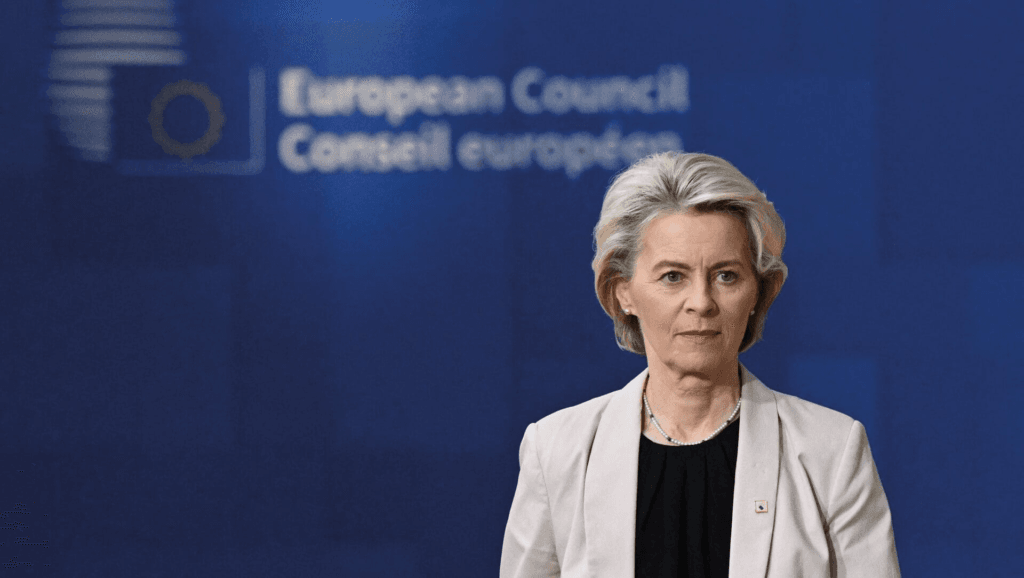
Commission President Ursula von der Leyen framed the initiative in stark terms:
“The choices we make today will shape our ability to face the challenges of today and the crises of tomorrow. Our AccelerateEU strategy will bring both immediate and more structural relief measures to European citizens and businesses. We must accelerate the shift to homegrown, clean energies. This will give us energy independence and security, and mean we are better able to weather geopolitical storms.”
Coordinated Crisis Response Across Member States
At the core of the plan is tighter coordination between EU member states. The Commission will align national actions on gas storage refilling, oil stock releases, and emergency supply measures.
Regular meetings of oil and gas coordination groups will ensure real-time visibility across the bloc. The approach is designed to avoid fragmented national responses that could worsen shortages or price spikes.
A new Fuel Observatory will track production, imports, exports, and stock levels of transport fuels. The system aims to identify shortages early and guide targeted interventions, particularly for critical sectors such as aviation.
The Commission will also clarify regulatory flexibilities to maintain fuel availability for airlines, including jet fuel supply stability.
Targeted Relief For Households And Industry
Short-term measures focus on cushioning consumers and businesses from price volatility. Governments will be encouraged to deploy targeted income support, energy vouchers, and social leasing schemes.
Temporary reductions in electricity excise duties for vulnerable households are also on the table.
A revised State Aid Temporary Framework will give governments greater flexibility to support energy-intensive sectors facing acute cost pressures.
The emphasis is on precision. Measures are designed to be targeted and temporary, limiting fiscal strain while addressing immediate economic risks.
RELATED ARTICLE: EU, Japan Deepen Climate Alliance To Accelerate Net Zero, Strengthen Energy Security
Electrification And Clean Energy At The Center
Beyond crisis management, AccelerateEU pushes structural transformation. The Commission will introduce an Electrification Action Plan by summer, setting ambitious targets for industry, transport, and buildings.
The strategy prioritises replacing oil and gas with electrified systems powered by renewable energy. It also accelerates deployment of sustainable aviation fuels through the Sustainable Transport Investment Plan.
Grid infrastructure remains a critical bottleneck. The Commission is urging rapid implementation of existing legislation and swift agreement on the European Grids Package.
Repowering existing renewable assets, including wind farms and hydropower plants, is identified as a fast-track solution to increase supply without lengthy permitting processes.
A forthcoming legislative proposal will also adjust network charges and taxation to favour electricity over fossil fuels.
Financing The Transition At Scale
The scale of investment required remains substantial. The Commission estimates €660 billion annually is needed through 2030 to meet energy transition goals.
Public funding will play a role, with €219 billion available under the Recovery and Resilience Facility alongside cohesion funds. However, officials acknowledge this will not be sufficient.
To bridge the gap, the Commission launched a Clean Energy Investment Strategy in March 2026. A dedicated investment summit will bring together institutional investors, industrial leaders, and project developers to accelerate private capital deployment.
The approach reflects a broader shift in EU policy. Energy security is no longer treated as a standalone issue but as a convergence of finance, industrial policy, and climate strategy.
What This Means For Executives And Investors
AccelerateEU signals a decisive pivot in Europe’s energy model. For corporate leaders, it increases regulatory certainty around electrification and clean energy deployment.
For investors, the €660 billion annual requirement highlights both opportunity and urgency. Capital will be needed across grid infrastructure, renewable generation, electrification technologies, and sustainable fuels.
At a governance level, the plan reinforces the EU’s commitment to reducing exposure to geopolitical shocks while aligning with long-term climate targets.
The broader message is clear. Energy security and decarbonisation are now inseparable. Europe is restructuring its system to address both at once, with implications that extend well beyond its borders.
The post EU Targets Energy Security With $711 Billion Clean Investment Push appeared first on ESG News.