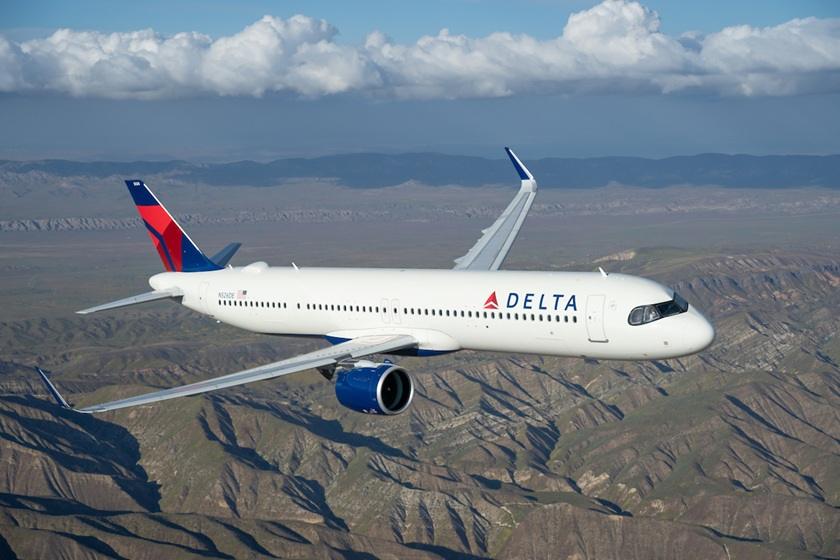
Countering recent media reports indicating that Delta Air Lines has eliminated its goal to increase its sustainable aviation fuel (SAF) to usage to 10% of fuel by 2030, a Delta spokesperson confirmed that the company “remains committed to our 10% SAF by 2030 goal,” in a statement provided to ESG Today.
The spokesperson acknowledged, however, that “the technology has not advanced as rapidly as the industry or our ambitions require, and this represents potential risk for decarbonization ambitions across the airline industry.”
The statement follows media reports last week that found that Delta had removed the SAF target from its website, and rephrased its target to achieve net zero by 2050 as an “aspiration,” rather than a “goal.”
Fuel accounts for the vast majority of the aviation sector’s emissions. Generally produced from sustainable resources, like waste oils and agricultural residues, sustainable aviation fuel is seen as one of the key tools to help decarbonize the aviation industry in the near- to medium-term. According to a recent report by the International Air Transport Association (IATA), however, while SAF production nearly doubled in 2025, it still accounted for just 0.6% of airlines’ total fuel consumption. Efforts to meaningfully increase the production of SAF face barriers including high initial costs and feedstock challenges.
Delta outlined its roadmap in 2023 to achieve its goals to reach net zero emissions by 2050 and provide more sustainable air travel, with the plan focusing largely on the evolution of SAF, as well as on efforts to develop more sustainable aircraft and technologies.
The spokesperson added that “Delta continues to see SAF as one of the most important levers for decarbonizing flight and is committed to being a key player in supporting its development,” and said that the 2030 SAF goal will be included in the company’s sustainability report, “Delta Difference,” to be published next month.
In a LinkedIn post released following the media reports, Delta’s Chief Sustainability Officer Amelia DeLuca also confirmed that the airline’s “goal of using 10% sustainable aviation fuel (SAF) by 2030 remains real,” and noted that the company increased its annual usage of SAF in 2025 by 80% to 23.4 million gallons. Delta revealed in its sustainability report last year that it more than tripled SAF use in 2024 to over 13 million gallons, accounting for approximately 0.32% of total fuel usage, based on fuel data from the company’s website.
In her post, DeLuca said:
“It’s all about creating momentum for SAF production and distribution. And like anything hard worth doing – this is a team sport. With the right partnerships, policies and public understanding in place, SAF has every potential to be a powerful driver of a more sustainable future of flight.”